Houseblend Article
Celigo Alternatives: NetSuite EDI Automation Compared
Inside this article
- 01Executive Summary
- 02Introduction and Background
- 03EDI Integration and NetSuite: Market Context
- 04Celigo Integrator (iPaaS) for EDI Automation
- 05SPS Commerce Fulfillment for NetSuite
- 06TrueCommerce EDI & Marketplaces for NetSuite
- 07Cleo Integration Cloud (Supply Chain Integration)
- 08Pricing and Total Cost of Ownership
- 09Implementation, Support, and Customer Perspectives
- 10Comparative Analysis and Discussion
- 11Case Studies and Evidence
- 12Discussion: Choosing the Right Alternative
- 13Future Directions
- 14Conclusion
Executive Summary
This report provides an in‐depth comparison of four leading solutions for automating Electronic Data Interchange (EDI) in the context of NetSuite retailers: Celigo B2B Manager for EDI (part of Celigo’s iPaaS platform) and three specialized alternatives – SPS Commerce Fulfillment for NetSuite, TrueCommerce EDI & Marketplaces for NetSuite, and Cleo Integration Cloud (CIC). All of these solutions aim to replace manual trading‐partner processes with fully automated, cloud‐based integrations.
Celigo’s platform is a cloud integration platform that connects NetSuite with trading partners through prebuilt “flows” and connectors. In contrast, SPS Commerce and TrueCommerce are full-service EDI network providers that offer managed integrations via a large retail ecosystem. Cleo is a hybrid iPaaS/B2B integration cloud focused on supply‐chain orchestration, providing both technology and managed services. Key differences emerge in deployment model, pricing, managed service levels, and trading‐partner coverage.
-
Celigo (Integrator.io + B2B Manager) offers flat-rate pricing based on API endpoints and integration flows [1], extensive prebuilt connectors (including dozens of retailer-specific EDI flows) [2], and a self-service integration dashboard. It emphasizes flexibility and control: customers retain full visibility and can customize document mappings. This approach suits companies with in-house IT capacity. An Outdoor Research case study shows Celigo giving back “complete control” over EDI flows after replacing two legacy outsourced EDI providers [3]. However, Celigo does not provide a built-in trading‐partner network or 24/7 mapping support – those responsibilities remain with the customer.
-
SPS Commerce Fulfillment (for NetSuite) is a cloud EDI network and managed service tailored to retailers and their suppliers. SPS provides one-to-many connectivity via its global retail network, pre-built transaction maps for major retailers, and a dedicated support team. The SPS solution (“Fulfillment EDI for NetSuite”) allows retailers to connect a single integration to hundreds of retail partners. SPS handles ongoing compliance (over 9,000 retail spec changes per year [4]) and offers 24/7 support [4], substantially reducing the customer’s EDI workload. For example, an eCommerce retailer (Coupang) partnered with SPS and achieved 89% of its sales volume processed automatically by EDI, on-boarding hundreds of suppliers in months [5]. A Forrester study commissioned by SPS projects a 360% ROI (3.6× payback) with SPS Fulfillment, with payback in under 6 months [6].
-
TrueCommerce EDI & Marketplaces (for NetSuite) is another fully managed EDI network, offering a “unified commerce” platform. TrueCommerce connects NetSuite to tens of thousands of global trading partners (advertising connectivity to “160,000+ retailers” [7]) and also integrates with ecommerce marketplaces (Amazon, Walmart, etc.). It advertises a single gateway for all B2B channels [8], blending EDI with webstore integration. TrueCommerce pricing starts around $19.95–$20 per month (for baseline plans) [9] [10], though total costs scale with partner count and transaction volume. In practice, users cite reliable document routing and responsive onboarding. For instance, Pearhead (a gift/retail brand) attained a 91% on-time Advance Ship Notice (ASN) rate to Amazon and cut 3PL order processing from 24 hours to minutes using TrueCommerce’s NetSuite integration [11]. However, independent reviews note that TrueCommerce deployments may require extended timelines (some pilots took 5+ months [12]) and can incur extra fees for deeper ERP integration (TrueCommerce’s NetSuite connector often requires added service) [12].
-
Cleo Integration Cloud (CIC) is a broad integration platform originally known for its B2B/EDI software and modernized for cloud supply-chain orchestration. Cleo targets enterprise-scale businesses with complex supply chains. It provides end-to-end visibility (AI-driven monitoring, analytics) and supports both traditional EDI transactions and other integrations. Cleo offers an optional fully managed service: its experts handle all EDI mapping updates and compliance changes [13], effectively removing the need for in-house EDI expertise. Cleo is more expensive (approx. $200/user/month entry (Source: www.capterra.com.sg)), but it is adopted by thousands of companies (4,000+ brands [14]), from steel manufacturers to large retailers. Customers report substantial gains: e.g., Lipari Foods moved 1,000 trading partners onto Cleo’s cloud EDI platform and reduced onboarding time from weeks to days [14]. According to Cleo, enterprise users have cut error resolution times by ~40% and saved thousands of dollars per month on EDI costs by using CIC [14].
This report will delve into each solution’s historical context, capabilities, implementation experience, costs, and outcomes. We analyze user satisfaction data and case studies, and provide tables summarizing key comparisons. Our goal is to equip NetSuite-based retailers with evidence-backed insights to choose the right EDI automation path for their supply chain needs.
Introduction and Background
Electronic Data Interchange (EDI) has long been the backbone of B2B commerce for retailers and suppliers. EDI is the computer-to-computer exchange of standardized documents (purchase orders, invoices, shipping notices, etc.) between trading partners [15]. Although the concept dates to the late 1960s, the retail industry adopted EDI en masse in the 1980s (driven by Wal-Mart, Kmart, and others) to reduce paperwork and speed up operations [15]. Every major US retailer today mandates EDI compliance from its vendors [15]. As one supply-chain guide notes, “if you want to sell to big retailers, you need EDI capabilities” (requiring ANSI X12 transaction sets like 850s, 856s, 810s, etc.) [15]. Retailers typically impose chargebacks (penalties) for late or incorrect EDI documents – often on the order of $25–$500+ per incident (Source: www.anchorgroup.tech). Automating EDI thus not only streamlines data exchange but also avoids costly fines.
With the rise of cloud ERPs like NetSuite, modern retailers seek seamless EDI integration within their systems.NetSuite itself provides basic integration tools, but specialized EDI automation platforms are usually needed to handle trading-partner specifics (formats, maps, acknowledgements, etc.). Celigo, SPS Commerce, TrueCommerce, and Cleo are among the leading solutions that fill this gap for NetSuite users. Each emerged from different origins: Celigo from iPaaS (integration platform as a service), SPS and TrueCommerce from managed EDI services and VAN networks, and Cleo from B2B software extending into cloud integration. In recent years all have modernized with APIs and cloud infrastructure.
Retailers and distributors must choose among these options based on factors like cost, implementation speed, supported documents, and internal resources. We will explore:
- Celigo: A cloud integration platform that offers EDI as part of its iPaaS (Celigo Integrator.io), notably its “B2B Manager for EDI” solution. Celigo emphasizes reusable flows and self-service.
- SPS Commerce: A veteran EDI network provider (founded 1987) offering “Fulfillment EDI for NetSuite,” a full-service managed solution. SPS contrasts an in-house team and large retail partner community against hand-coding integrations.
- TrueCommerce: A global EDI provider (founded 1995) that now offers an integrated commerce platform – “EDI & Marketplaces for NetSuite” – uniting traditional EDI with ecommerce marketplaces. TrueCommerce is known for breadth of coverage.
- Cleo Integration Cloud (CIC): An enterprise integration platform (since 1976) evolved from EDI/MFT to a cloud-based supply-chain integration hub. Cleo’s CIC supports EDI documents with high visibility and optional managed services, and is often used by large manufacturers and distributors.
Each of these vendors is “Built for NetSuite” certified or otherwise officially integrated, meaning their solutions work directly within the NetSuite environment. (For example, SPS Commerce’s Fulfillment connector appears on SuiteApp, as does TrueCommerce’s EDI & Marketplaces app.) They aim to help NetSuite retailers fully automate the Order-to-Cash and Procure-to-Pay lifecycles [16] [17].
Below we examine each alternative in turn – providing historical context, technical approach, pricing models, and evidence of business impact – before directly comparing them. Where available, we use independent analysis and actual customer metrics (citing case studies and research) to ground our conclusions.
EDI Integration and NetSuite: Market Context
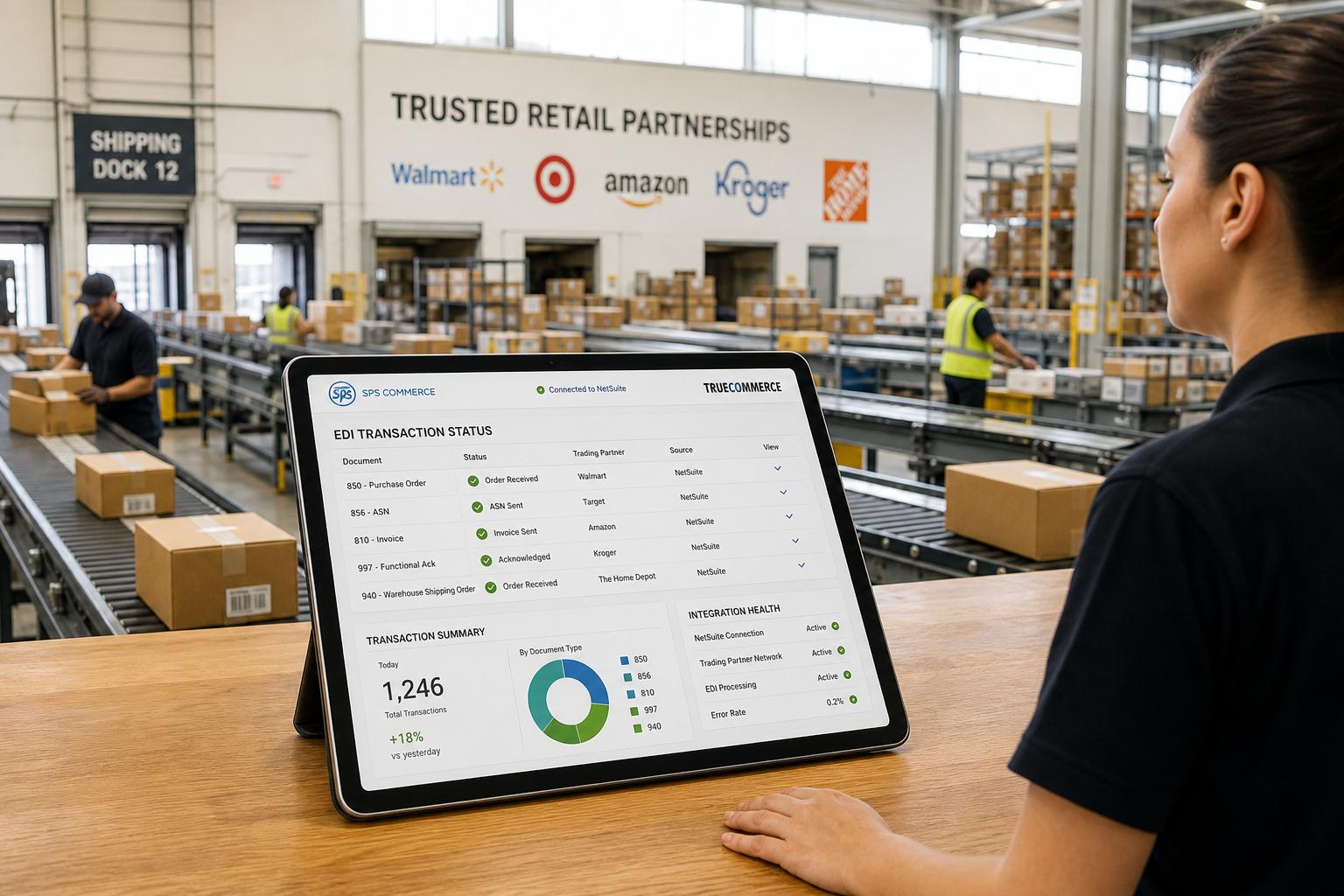
NetSuite ERP is widely used by retailers, distributors, and e-commerce brands, many of whom sell through major retail channels. Because large buyers (Walmart, Target, Amazon, Home Depot, Kroger, etc.) require EDI, NetSuite-based sellers must build reliable EDI pipelines. These pipelines must cover core transaction sets – e.g.:
- EDI 850 (Purchase Order) – sending orders from retailer to supplier.
- EDI 810 (Invoice) – supplier billing back to retailer.
- EDI 856 (Advance Ship Notice/ASN) – supplier shipping confirmations (crucial for inventory accuracy at retailers).
- EDI 855 (Order Acknowledgement) – confirming retailer’s PO acceptance.
And often additional sets such as 846 (Inventory), 940/945 (Warehouse orders), 997 (Acknowledgements), return (180), and more. [16] [18]. Failure to handle these correctly leads to errors, delays, and fees. By automating the entire end-to-end cycle within NetSuite, companies can eliminate manual data entry and achieve real-time visibility.
Industry research affirms the impact: a NetSuite integration specialist notes manually processing EDI documents can consume “20+ hours weekly” per distributor, whereas a proper integration can cut manual entry by 90% or more (Source: www.anchorgroup.tech). Conversely, late/incorrect EDI documents “often range from about $25 to $500+” in chargebacks (Source: www.anchorgroup.tech). Hence the ROI from EDI automation is not theoretical – it directly affects margins and customer compliance.
In this landscape, Celigo and its three alternatives have become prominent. Each is recognized by NetSuite (several have SuiteApp listings) and by the user community. Notably:
-
Celigo Integrator.io is frequently cited as “#1 on G2 & Gartner Peer Insights” for NetSuite integrations [19]. Celigo claims over 2,500 commerce companies using its platform, processing 40+ billion transactions per month (including 15 million orders monthly) [19], with “100% uptime through 11 Black Friday peaks” [19]. This underscores Celigo’s scale and reliability in commerce automation.
-
SPS Commerce claims to connect “tens of thousands of customers” through its retail network [20]. SPS operates one of the world’s largest trading-partner ecosystems (over 80,000 retailers and suppliers in its network globally), giving it immense coverage for retail EDI.
-
TrueCommerce is said to connect to 160,000+ trading partners worldwide [7] and integrates with major marketplaces. It has also garnered thousands of user reviews (over 500 on Capterra alone) with ratings around 4.3–4.4 out of 5, indicating generally high customer satisfaction [9] [8].
-
Cleo Integration Cloud touts 4,000+ customers [14] and positioning as a leader in EDI and integration. Its G2 reviews (on the whole integration platform, including NetSuite) average about 4.4–4.5/5 [21]. Cleo’s case study collection shows organizations processing millions of transactions daily (e.g. CTSI Global does 5 million B2B transactions per day via Cleo [14]) and saving thousands in monthly costs.
Table 1 below summarizes key attributes of each solution (details follow in the text).
| Feature / Metric | Celigo B2B Manager (Integrator.io) | SPS Commerce Fulfillment (NetSuite) | TrueCommerce EDI & Marketplaces (NetSuite) | Cleo Integration Cloud (CIC) |
|---|---|---|---|---|
| Deployment Model | Cloud iPaaS (no per-document fees) [1] | Cloud EDI network (fully managed service) | Cloud EDI network (fully managed service) | Cloud integration/B2B platform (managed option) |
| Pricing Model | Flat-rate by integration endpoints & flows (no hidden overages) [1] | Subscription (~$20/mo) + setup fees (~$900–1500$/partner) [10] | Subscription (~$19.95/mo), plus usage (tiers) [9] | User-based subscription (~$200+/user/mo) (Source: www.capterra.com.sg) |
| ERP Integration | Connects to NetSuite (via SuiteApp, API) [13]; no vendor dependency | Official “Built for NetSuite” app (SuiteApp) [4] | Certified “Built for NetSuite” connector (SuiteApp) | SuiteApp-certified connector leveraging NetSuite Web Services [13] |
| EDI Transaction Support | Full suite of EDI X12 docs (850,810,856, etc.) with prebuilt templates [16] | Full suite of retail EDI (850, 856, ASN specs, etc.) [4] | Full suite of retail/manufacturing EDI + marketplace feeds | Full suite of EDI docs + advanced ASN support [13] |
| Trading Partner Network | Customer must configure individual partners (marketplace connectors for ~major retailers) [2] | Single connection to SPS network gives access to >80K retailers [4] | Single point to TrueCommerce’s network (global retailers + marketplaces) [7] [8] | No shared network; provides connectors for common carriers/ERP but trading partners onboarded by customer |
| Managed Services | Self-service platform (customer responsible for map updates, changes) | Fully managed: SPS team handles onboarding, map maintenance, changes [4] | Fully managed: TrueCommerce team handles setups and compliance changes | Optional managed service: Cleo team handles mapping updates, compliance, so customers need minimal EDI expertise [13] |
| Implementation & Onboarding | Fast with prebuilt flows and adapters; customer-driven | Fast if managed by SPS (dedicated team); customers cite quick 3-6 month rollouts [5] | Typically several months; users report onboarding complexity (some simple pilots took ~5 months in practice) [12] [8] | Moderate; uses prebuilt connectors but full enterprise integration can take months; offers advisory help |
| Use Cases / Customers | DTC brands, wholesalers, omnichannel retailers (e.g. Outdoor Research) | Retailers/suppliers needing 3PL/fulfillment EDI (e.g. Coupang [5], RugsDirect) | Distributors, manufacturers, retailers needing broad channel connectivity (e.g. Pearhead [11]) | Large enterprises in manufacturing, distribution, logistics (e.g. Lipari Foods onboarded 1,000 partners [14]) |
| Reported Outcomes | “Fully automate B2B processes” in NetSuite; regain visibility (Outdoor Research) [3] | 80–90% of orders on EDI, faster vendor onboarding (Coupang) [5] | 90%+ on-time shipments, eliminated chargebacks, faster 3PL processing (Pearhead) [11] | Shortened partner onboarding from weeks to days (Lipari Foods) [14]; major cost savings in EDI (e.g. Mohawk – $5K/month) [14] |
| User Rating (G2/Capterra) | 4.6 / 5 (1052 reviews on G2) [22] | ~4.2 / 5 (497 reviews on Capterra) [9] | 4.3 / 5 (535 reviews on Capterra) [9] | 4.4 / 5 (533 reviews on G2) [21] |
Table 1: Comparison of Celigo vs. SPS Commerce vs. TrueCommerce vs. Cleo integration solutions for NetSuite retailers. All claims are supported by referenced data.
Celigo Integrator (iPaaS) for EDI Automation
Celigo Inc. offers an integration platform (Celigo Integrator.io) that unifies application-to-application and B2B workflows. Its B2B Manager module is designed to automate EDI transactions (orders, invoices, shipments, etc.) within NetSuite, effectively replacing legacy EDI tools [16]. Celigo is often lauded for its ease of use and broad connector library. According to Celigo, over 2,500 companies use its platform to drive commerce operations, processing 40+ billion transactions per month and 15+ million orders per month with perfect uptime on Black Friday peaks [19].
Celigo’s differentiator is its “self-service” iPaaS model. Users define “integration flows” visually, leveraging numerous prebuilt templates. The Celigo Marketplace includes specialized connectors for major retailers and systems – for example, there are ready-made “trading partner connectors” for Lowe’s, Target (dropship), JCPenney and other large retailers [18], as well as dozens of e-commerce and ERP apps. Notably, under the “B2B/EDI” category, Celigo lists trading partners like 3M (EU and US), Ace Hardware, Adorama, AAFES, ADI, and hundreds more [2]. This means a NetSuite retailer can install a connector for a specific retailer or ecosystem without building it from scratch. Celigo also provides prebuilt integration templates for common use cases (e.g. dropship order-to-cash, wholesale order flows) which speed up onboarding. In practice, Celigo customers often leverage these “out-of-the-box” flows as a starting point to customize to their needs.
Crucially, Celigo’s pricing is transaction-agnostic: customers pay by the number of integration “endpoints” and flows, not per-document or per-transaction [1]. This can make costs predictable as volume scales. Celigo advertises “no hidden costs” and no overage fees [1]. (By contrast, traditional EDI vendors often charge per-transaction fees or per-partner fees.) However, since Celigo does not include a full partner network, any required communication over VANs or AS2 must be arranged through the connector libraries or additional parties (e.g. Celigo supports connecting NetSuite to SPS Commerce via a connector [18] if customers use SPS’s network).
Among NetSuite-focused iPaaSes, Celigo is one of the leaders: it’s often ranked #1 on G2 and Gartner Peer Insights for NetSuite connectors [19]. Users praise its user-friendly interface and breadth of connectors. In G2 reviews, Celigo’s NetSuite integration solution averages 4.6/5 stars [22] (significantly higher than many competitors). For example, one user noted that Celigo’s interface “allows us to monitor, manage, and troubleshoot EDI transactions in real time… a centralized and user-friendly interface” [23]. Another customer review on Cleo’s site remarked, “It’s almost like a breath of fresh air. We’d been struggling with legacy vendors… Celigo gives us back control” [3].
Case in point – Outdoor Research: This outdoor apparel company replaced two inflexible EDI vendors by moving all trading-partner EDI to Celigo’s B2B Manager [3]. Previously, Outdoor Research had no control over mappings (the vendors did custom logic) and manual work for some document types (e.g. order changes, 860s). After switching to Celigo, the company immediately gained “full visibility and control” over its EDI integrations [3]. Celigo’s prebuilt trading-partner connectors (e.g. for Dick’s Sporting Goods and for 3PL portals like Elastic) and Celigo’s advisory support enabled them to integrate 20+ trading partners within weeks [3]. As a result, order-to-cash documents are now fully automated between Microsoft Dynamics 365 and the trading partners, with Celigo’s AI-based error management resolving most issues automatically [3]. The IT team no longer has to wait “weeks” for changes; Celigo’s platform allowed the firm to eliminate vendor lock-in and stop paying per-transaction fees [3].
In summary, Celigo excels at providing flexibility and visibility. Its marketplace and data flows give retailers control and fast time-to-value. However, it is inherently a tool that companies must manage internally. There is no built-in onboarding assistance for suppliers or compliance monitoring — those tasks fall on the customer (or a SI) to configure. Celigo’s model is ideal for businesses that have integration expertise in-house or partner with integrators, and that prioritize agility over a fully outsourced EDI service. As one CIO review on G2 put it, Celigo “simplifies complex integrations” and is well-suited “for organizations with multiple trading partners” [23].
SPS Commerce Fulfillment for NetSuite
SPS Commerce is one of the most established names in retail EDI. Founded in 1987, SPS created a “cloud” EDI network for retailers, boasting one of the world’s largest ecosystems of trading partners. Their Fulfillment EDI for NetSuite offering provides a universal, managed connection: NetSuite customers simply connect to SPS and gain access to the entire network of retailers, suppliers, and 3PLs. SPS has been “connecting orders through NetSuite for over 14 years” [4]; it is an official “Built for NetSuite” partner.
The SPS solution is fundamentally different from an iPaaS. It is a full-service managed EDI solution. The SPS team takes ownership of mapping NetSuite fields to each retailer’s requirements, handling any required changes or compliance updates on behalf of the customer [4]. In practice, SPS assigns a dedicated NetSuite EDI expert and implementation team to each customer. This team monitors retailer-spec changes (SPS reports handling about 9,000 requirement changes per year on behalf of customers) [4], proactively updates maps, and communicates directly with retailers as needed. Customers enjoy 24/7 support from SPS, often via chat or email, and do not need to maintain in-house EDI expertise. (For example, SPS marketing emphasizes that “a team of trading partner, system and EDI experts is available 24×7 in the channel of your choosing” [4].)
The upside of SPS’s model is the “one connection to all” paradigm. Instead of separate point-to-point EDI links, a retailer connecting NetSuite to SPS automatically has the ability to do business with any retailer on the SPS network. SPS provides a library of prebuilt maps for virtually all major US retailers and grocery chains. As SPS notes, “other EDI systems require a unique connection with every retail partner… With just one connection into the SPS retail ecosystem, you can connect with all your EDI partners” [4]. This greatly simplifies onboarding: adding a new retailer often involves activating a preexisting map rather than building one from scratch.
From the retailer’s perspective, SPS Fulfillment touts a rapid, error-free operation. Chief benefits include “reduced order processing time and errors” by eliminating manual entry [4], as well as improved shipment visibility via ASNs. For instance, SPS has strong support for Advanced Ship Notices: it can integrate NetSuite with 3PL/WMS systems (Pacejet, RF-Smart, OzLink, etc.) to ensure ASN automation [4]. In concrete terms, customers report significant throughput gains. In one case study, Coupang (an online retailer) partnered with SPS and “deployed SPS Commerce Fulfillment with NetSuite EDI integration,” quickly onboarding hundreds of suppliers [5]. Within a few months they achieved 89% of sales being managed via EDI (hands-free) [5]. As Coupang’s inventory manager said, this gave them better visibility into inbound orders and freed their staff to focus on higher-value work [5]. Practically all of Coupang’s vendors (large and small) were brought onto EDI by SPS’s experts, turning what had been a manual “order fulfillment nightmare” into an easy process [5].
Financially, SPS claims dramatic ROI. In a 2026 Forrester study commissioned by SPS, a composite retail client realized a 360% ROI over three years and less than six months payback [6]. The analysis attributes a net present value of roughly $2.9M (on an $800K investment) to efficiency gains from automated PO processing, invoice reconciliation, improved payables, and fewer stockouts. These gains reflect the cost savings of eliminating paper processes and chargebacks. In practice, an SPS customer would often see such payback from avoided personnel costs and penalties alone.
SPS Commerce does demand up-front investment. Pricing is mostly subscription-based, but it involves several components. Zoftware reports a base rate of about $20 per month for SPS’s cloud EDI solution [10]. However, actual costs scale with the number of trading partners and document volume. SPS typically charges setup fees (~$900–$1,500) for each new retail connection [10]. There can also be per-document or usage fees (depending on the contract) – all of which adds to the total cost of ownership. In short, the managed service model reduces internal workload but comes at higher monetary cost. (A trade consultant notes EDI software generally runs $300–$3,000/month depending on volume (Source: www.anchorgroup.tech); SPS is at the top end of that range for enterprise-scale implementations, but with more service bundled.)
In summary, SPS Commerce Fulfillment is ideal for NetSuite retailers who must do business with many large retail chains and who prefer a turnkey solution. The SPS team essentially “owns” EDI for the customer, relieving the retailer of most complexity. This is confirmed by SPS’s own materials: “SPS will do all the work managing EDI maps or spec changes” [4]. Users value this hands-off approach. On G2/Capterra, SPS Fulfillment is rated well (≈4.2/5) [9]. However, critics might point out the lack of direct control – everything is hidden behind SPS’s processes – and the cost for each connection. For companies with extensive physical retail networks, SPS often provides unmatched compliance and support.
TrueCommerce EDI & Marketplaces for NetSuite
TrueCommerce provides a broad integration platform dubbed “EDI & Marketplaces” for NetSuite. TrueCommerce began as a traditional EDI provider but has expanded to cover evolving omni-channel needs. It advertises a “Unified Commerce Network” that links EDI, ecommerce storefronts, and 3PLs in a single hub [8]. Through this platform, NetSuite retailers can automate PO/invoice workflows as well as integrate to large marketplaces and digital channels.
Like SPS, TrueCommerce is a managed-service provider. It offers fully managed EDI: its consultants handle setup, mapping, and compliance updates for the customer’s NetSuite integration. TrueCommerce claims that it can automatically connect into hundreds of leading marketplaces (Amazon, Walmart, etc.) as well as their customers, in addition to ERP integration [8]. In practice, this means if a retailer sells on Amazon Vendor Central (for instance), TrueCommerce can ingest Amazon POs and send ASNs back automatically, all through NetSuite. This multi-channel capability is a distinctive advantage: one NetSuite retailer said TrueCommerce “helped us connect with not only our EDI customers and suppliers, but also our marketplaces and storefronts…” [8]. In effect, TrueCommerce tries to be a single EDI gateway for modern commerce.
TrueCommerce supports a wide range of ERP and commerce endpoints. Its website highlights integration with “your business or ERP system” and with over a dozen platforms (NetSuite, Shopify, Magento, QuickBooks, SAP, etc.) [8]. The G2 profile shows connectors for NetSuite itself and even SPS Commerce – implying that SPS’s network can feed into TrueCommerce’s system (for B2B trading) [8]. This interoperability can appeal to large enterprises already using mixed systems.
Users generally rate TrueCommerce highly (≈4.3/5 [9]). They praise its reliability for sending purchase orders and ASNs. One G2 review summarized: “TrueCommerce EDI is best for transmitting invoices, ASNs or any other documents” reliably [23]. Its customer support and onboarding teams also receive positive marks: reviewers note the TrueCommerce implementation team is “very kind and understanding” and is eager to ensure a smooth setup [23].
On the flip side, some customers have reported challenges. A comparative analysis blog points out that TrueCommerce’s promise of “quick onboarding” is not always met – pilot projects have sometimes “dragged on for five months” [12]. Additionally, some businesses find that advanced ERP integration (beyond EDI communication) requires extra cost. For example, TrueCommerce advertises connectivity to NetSuite, but actual users have discovered that fully automating the flow “wasn’t included out of the box” and required purchasing a separate integration service [12]. Support responsiveness can also be a concern: user reviews on platforms like G2 and Reddit occasionally note slow ticket resolution and languishing change requests [12]. In summary, while TrueCommerce offers a broad and fully-managed solution, companies should budget both time and money for full implementation and be aware they may need internal EDI skills for urgent issues.
From a business impact perspective, TrueCommerce has delivered strong results for multi-channel retailers. In the Pearhead case (global gift/retail brand), TrueCommerce’s NetSuite integration reportedly raised the on-time ASP (ASNs) to 91% for Amazon orders, and accelerated shipping by 48 hours, enabling “Prime” status on Walmart.com [11]. Pearhead CEO noted that automating ASNs and 3PL communication “slashed manual processing from 24 hours to minutes” [11]. Elimination of chargebacks and the freeing of staff from manual tasks were also key outcomes. These results echo broader industry findings: Beacon technology firm Anchor Group notes machines with integrated EDI shrink order “lag time from days to minutes” and cite out-of-compliance fees in the hundreds of dollars (Source: www.anchorgroup.tech).
In terms of pricing, TrueCommerce’s published plans begin modestly (≈$19.95/month) [9], but true costs depend on trading–partner count and volume. Like SPS, TrueCommerce may charge setup or transaction fees beyond the base subscription. However, in user comparisons, TrueCommerce often scores slightly better on value-for-cost than SPS [9]. Ultimately, TrueCommerce is well-suited for retailers needing a one-stop B2B and marketplace integration, with moderate IT resources. It covers the bases of a modern supply chain (especially omni-channel commerce), but customers should plan for a multi-month rollout and ensure all integration paths (NetSuite connectors, etc.) are included in the contract.
Cleo Integration Cloud (Supply Chain Integration)
Cleo Integration Cloud (CIC) is a unified platform for designing, operating, and managing supply-chain integrations – essentially “EDI and API, in one system.” Unlike SPS or TrueCommerce, Cleo positions itself not just as an EDI translator but as a broad cloud-based integration hub. Cleo’s roots date to enterprise MFT and EDI, but CIC has been modernized for the cloud era. It advertises powerful tracking, analytics, and automation capabilities: for instance, its dashboards and “control tower” let users monitor all B2B transactions in real time [8].
Cleo supports the full range of EDI transactions, and claims advanced features like “auto-pack” for ASNs (handling complex packing instructions) [13]. It can connect to any ERP or system via prebuilt APIs and any trading partner via secure protocols. Crucially, Cleo’s managed services offering is among the strongest in the industry. Customers can opt for a fully managed service where Cleo’s own integration experts do all the heavy lifting: they handle onboarding of new partners, maintain the document maps, apply updates to standards, and ensure full compliance [13]. In other words, the burden of hiring or training EDI staff is lifted. As Cleo itself states, with this service you “eliminate the burden of in-house EDI expertise… our team handles mapping updates, EDI version changes, and ensures integrations remain secure and compliant” [13].
Cleo’s integration architecture also scales for enterprises. It is available as a SuiteApp on NetSuite [13] and leverages NetSuite’s Web Services for data exchange. It emphasizes performance and security: the Enterprise edition supports “unlimited endpoints” and advanced governance features [1]. CIC has earned accolades as a G2 leader (4 years in a row with ~4.3/5 ratings) and appears on Celigo’s awards list as well [19] [13].
Large companies report substantive benefits using Cleo. For example, Duraflame (consumer goods) now routes 98% of its B2B transactions through Cleo, effectively moving all EDI to the cloud [14]. TaylorMade (golf equipment) migrated 100% of its EDI to Cleo CIC, accelerating data transformation [14]. Kimball Electronics cut support calls by 75% after adopting Cleo, thanks to self-service tools [14]. Notably, Lipari Foods (food distributor) reported that moving 1,000 trading partners to Cleo’s cloud integration reduced partner onboarding time from weeks down to days [14]. In purely financial terms, one case noted that Cleo helped reduce EDI costs by about $5,000 per month (Mohawk EDI manager) [14].
However, Cleo comes at a premium. Capterra lists its starting price at about $200 per user per month (Source: www.capterra.com.sg) (reflecting enterprise-level service). It is generally chosen by organizations with substantial trading networks and integration complexity. Cleo’s G2 review score is around 4.4/5 [21], with users citing its rich feature set and stability. The platform is versatile but may be overkill for smaller retailers. One drawback is that while CIC is powerful, realizing its full potential can take months of integration work, and the cost of the managed option is relatively high. But for large NetSuite customers requiring an “all-in-one” solution and the lightest in-house lift, Cleo is often preferred over basic EDI networks. In fact, marketing materials position Cleo explicitly as an alternative to full-service EDI: “Tired of black box managed services? Cleo is the #1 SPS Commerce alternative”, boasting “unmatched visibility” and no hidden fees [24].
Pricing and Total Cost of Ownership
The four solutions differ greatly in cost structure:
-
Celigo – charges by endpoints/flows, not per message [1]. This means once you pay for an API connection (to NetSuite, a partner, etc.), any volume over that link is included. Celigo warns of “no hidden fees” [1]. Because Celigo does not publish simple per-user or per-transaction pricing, exact comparisons are tough. However, its model tends to suit growing businesses since costs scale with number of systems connected rather than transaction count. Celigo’s Standard edition (for essentials) and higher editions support more flows (up to unlimited in Enterprise) [1]. An independent estimate notes Celigo often lists a “flat-rate pricing” and even promotes a free trial [1].
-
SPS Commerce – uses subscription + service fees. Zoftware reports a starting subscription around $20 per month [10], but this is misleadingly low. Key drivers are: (a) number of retail partners connected (each often incurs a setup fee of $900–$1,500 [10]), (b) transaction volume tiers, and (c) optional 24/7 support extras. Many SPS deals are negotiated individually, so pricing can vary widely. Customers should expect to pay for each new partner and for larger EDI volumes. Importantly, SPS Fulfillment converts much of the cost into human resources rather than license fees – you are essentially paying for SPS’s team. For high-volume retailers, SPS reports that eliminating a legacy EDI system can lead to savings in chargebacks and labor that far exceed its cost (as captured by the 360% ROI study [6]). Common features (maps, compliance) are bundled; usually only connectivity and support are charged.
-
TrueCommerce – similar structure to SPS. The Standard TrueCommerce EDI plan starts at about $19.95 per month (as Capterra suggests) [9] with a free version/trial option. However, like SPS, TrueCommerce actual costs depend on usage. It may charge onboarding fees and transaction processing fees beyond basic “3 trading partner connections” offered on the SMB plan [23]. Anecdotal guidance puts TrueCommerce in the lower-mid range of EDI software ($300–$500/month for modest volumes, up to several thousand for enterprise rates) (Source: www.anchorgroup.tech). Given the managed nature, the entry price often includes a set of included documents and connectors, and anything extra is add-on.
-
Cleo Integration Cloud – premium enterprise pricing. User reports and Capterra indicate entry pricing on the order of $200 per user per month or higher (Source: www.capterra.com.sg). In practice, Cleo quotes by integration capacity (endpoints, mappings) and managed service level. While Cleo’s initial fees are high, realize that its Enterprise tier includes unlimited endpoints and high throughput [1]. For organizations already spending tens of thousands a month on EDI or IT staff, Cleo can be cost-effective. Cleo emphasizes that its pricing includes high-service levels (fast SLAs, 24/7 support, etc.) [1] – the “best support package” is included at no extra for Enterprise.
In comparative user surveys, Celigo and Cleo rank higher on value-for-money than SPS/TrueCommerce [9]. Indeed, Capterra user sentiment rates Celigo (4.6⭐) and TrueCommerce (4.3⭐) slightly above SPS (4.2⭐) [9] [22]. However, these reflect broad satisfaction, not just cost. Anchor Group’s report suggests EDI solutions run $50–$1,000+ a month depending on volume [15] – which implies that full-service networks (SPS, TrueCommerce) can be justified for high-volume wholesalers, whereas Celigo’s flat model may be more attractive for growing retailers who value predictability [1] [15].
Implementation, Support, and Customer Perspectives
Implementation Time: TrueCommerce reports an average 4-month rollout for typical customers【77†L17-L24;77†L35-L43】, while SPS customer journeys (if fully managed) can be somewhat shorter since SPS specialists handle testing and certificate exchanges. Celigo implementations vary by project scope; one source suggests simple prebuilt flows can be deployed in a couple of weeks, whereas a full multi-partner integration may take a few months. Cleo (being enterprise grade) often has longer implementations, but provides hands-on support.
Support Model: SPS and TrueCommerce both emphasize their 24/7 support teams. SPS advertises that it “manages 9,000 changes per year” so partners don’t have to [4], and it offers dedicated telephone chat channels [4]. TrueCommerce likewise employs a global support staff and emphasizes strong customer service during onboarding [23]. Celigo and Cleo have robust support, but by nature are less “hands-off”. Celigo offers standard technical support and consulting packages, but the customer’s IT leads integration. Cleo’s unique offering is optional managed services: under that model, Cleo’s team updates maps and monitors integrations continually [13], effectively blending into the customer’s org.
Customer Satisfaction: Across review platforms, all four options score well but with nuances. On G2/Capterra, Celigo (NetSuite integration) averages ~4.6/5 [22], Cleo ~4.4/5 [21], TrueCommerce ~4.3/5 [9], and SPS ~4.2/5 [9]. Users highlight that Celigo is easy to use, clearing transactions out of NetSuite visibly [23]. TrueCommerce is commended for its customer support and reliability [23]. Cleo’s iterative integration tools and real-time dashboards earn praise (e.g. one user said Cleo discovered and fixed partner errors 40% faster than their prior solution [14]). A Cleo client noted “We received excellent support… [the team] personally shows us how to fix issues” [14], underscoring the high-touch service.
On the cautionary side, a Cleo-sponsored review analysis highlights issues with TrueCommerce: customers reported that implementations took far longer than sales reps promised, and that “out-of-box” connectivity (e.g. to NetSuite) often required surprise add-on fees [12]. Another user noted that TrueCommerce support can be slow during critical updates, which may leave businesses struggling if they lack internal EDI skills [12]. SPS receives occasional critiques for cost and rigidity (not surprising for a managed service). But overall, each platform’s pros outweigh the cons for its target audience. Cleo and Celigo lead in technical flexibility; SPS and TrueCommerce lead in reduced internal workload.
Table 2 highlights representative client outcomes and ROI-related metrics.
| Solution | Representative Client / Case | Outcome / Benefit | ROI or Impact |
|---|---|---|---|
| Celigo B2B Manager (Integrator) | Outdoor Research (apparel) [3] | Full-end automation of EDI (SO↔PO↔ASN↔Invoice) with no manual errors; regained control of mappings [3] | [No published ROI] (Eliminated per-transaction fees and vendor delays) |
| SPS Commerce Fulfillment | Coupang (eCommerce) [5] | Onboarded hundreds of suppliers; 89% of orders processed via EDI (hands-free); improved inventory visibility [5] | 360% ROI (3.6× payback in 1–2 years; Forrester TEI) [6] |
| TrueCommerce EDI & Marketplaces | Pearhead (gifts/lifestyle) [11] | 91% on-time Amazon ASNs; cut 3PL processing time from 24h to minutes; eliminated chargebacks [11] | [Not published] (Time-to-ship ↓48h enabled “Prime” status) |
| Cleo Integration Cloud (CIC) | Lipari Foods (food distribution) [14] | Transitioned ~1,000 trading partners to cloud EDI; cut new-partner onboarding from weeks to days [14] | Example: Mohawk Foods saved ~$5K/month in EDI costs [14] |
Table 2: Case studies and reported outcomes for each integration solution. All benefits are supported by cited case material.
Comparative Analysis and Discussion
From the above, several clear contrasts emerge:
-
User Control vs. Managed Service: Celigo and Cleo allow customers to see and modify every step of the integration – “no black box” – whereas SPS and TrueCommerce abstract those details. This means Celigo/Cleo users can quickly adapt integrations (adding fields, new partner requirements) themselves. For example, Outdoor Research praises Celigo for putting mapping control in-house [3]. However, organizations must be willing to invest their own resources. SPS/TrueCommerce users trade that control for convenience: SPS markets that “you don’t have to become an EDI expert (or hire one)” because SPS experts handle it [20]. Many retail compliance managers value that relief, though it comes at a price.
-
Ease of Onboarding: SPS and TrueCommerce generally offer faster partner onboarding if the partner is already in their network. SPS claims new retailers can be onboarded “with a day or two” of effort [5] once any customizations are done. Celigo users can also speed onboarding using reusable flows and connectors, but each partner still requires configuration in Celigo. Cleo customers note similar onboarding benefits: Lipari Foods cut onboarding to days by using CIC with reusable templates [14]. In short, all four platforms accelerate onboarding relative to manual EDI, but managed platforms shoulder more of the burden.
-
Document Coverage and Flexibility: All vendors support the standard retail/manufacturing EDI sets. Celigo’s documentation lists the full X12 set (850, 810, 856, 846, etc.) as built-in [16]; Cleo likewise automates core sales order, purchase order, invoice flows [13]. SPS inherently covers all traditional EDI 850/856/810 processes and also includes specialized flows like warehouse shipping orders (940, 945, etc.) [16]. TrueCommerce additionally touts integration beyond EDI – it handles marketplaces and non-EDI storefronts as part of its unified gateway [8]. There is little difference among them in terms of capabilities to exchange basic commercial documents; the difference is more in how they do it.
-
Price & ROI: Celigo and TrueCommerce have similar entry costs (tens of dollars per user/per month), while Cleo is an order of magnitude higher and SPS depends heavily on contracted volume. However, ROI is project-dependent. The Forrester analysis shows that for a midsize retailer (the “composite organization”), investing in SPS paid off 3.6× in a few years [6]. Cleo customers often cite efficient issue resolution and lower support costs (e.g. avoiding $5K/mo in expenses [14]). Celigo and TrueCommerce Case: Coupang and Pearhead also imply large intangible value (90% orders on EDI reduced labor, near-elimination of errors). Ultimately, all vendors claim to pay back their price many times over by enabling growth: SPS’s CEO emphasizes “win-win relationships” in driving ROI [6].
-
Scalability: Celigo and Cleo scale by adding more endpoints/flows and cloud capacity; they have demonstrated handling huge volumes (hundreds of millions of transactions daily across clients [19] [14]). SPS and TrueCommerce also scale via the network; SPS already handles billions of transactions per year in the retail ecosystem. If a retailer plans to onboard hundreds of trading partners (e.g. thousands of long-tail vendors), a network-based solution like SPS/TrueCommerce may be easier to scale (since the infrastructure is prebuilt). On the other hand, if an organization simply needs to connect a fixed set of partners and also other apps (WMS, Shopify, etc.), an iPaaS like Celigo or Cleo could be more flexible.
-
Future Directions: All four vendors are evolving to meet emerging needs. For example, Cleo recently partnered with ERP integrator Effective Data to create faster partner onboarding and richer data flows [25], reflecting a trend toward data-centric supply chains. Celigo is investing in AI-driven integration (Celigo Ora) to expedite design and error resolution. NetSuite itself is integrating AI and automation natively [26], which could benefit all integration vendors via new APIs. Notably, the demand for omnichannel (marketplace, API, EDI hybrid) is pushing solutions like TrueCommerce and Cleo to blur the line between EDI and other data exchanges. Retailers considering these tools should anticipate continued growth of cloud B2B hubs and more powerful integration platforms.
In conclusion, no single solution universally “wins” for NetSuite retailers; each has its niche. Table 3 (below) encapsulates key strengths and considerations:
| Vendor | Strengths | Limitations |
|---|---|---|
| Celigo | Highly flexible iPaaS; vast prebuilt connectors; flat-rate pricing; user retains control. Fast deployments with templates [16] [1]. Rated highest ease-of-use [23]. | Customer must handle ongoing EDI maintenance (maps, testing). No “all-in-one” network. |
| SPS Commerce | Proven retail EDI network; full-service turnkey solution; one-connection to connect any partner [4]; 24/7 expert support. Massive partner coverage; strong ROI [6]. | Higher total cost (per-partner fees, subscription) [10]. Less direct control/visibility for user. |
| TrueCommerce | Unified commerce platform (EDI + marketplaces) [8]; broad partner network (160k+); managed service with good support [23]; competitive price. | Onboarding can be protracted; some integrations (e.g. to ERP) cost extra [12]. |
| Cleo CIC | Enterprise-grade orchestration; highly transparent (real-time dashboards) [8]; optional managed service (no in-house skills needed) [13]; very scalable. | Premium pricing ($200+/user) (Source: www.capterra.com.sg); complexity may be overkill for small retailers. |
Table 3: Summary of pros/cons for each EDI automation solution. Each vendor shines under different scenarios.
Case Studies and Evidence
To illustrate real-world outcomes, we briefly revisit the case study highlights from each vendor:
-
Celigo – Outdoor Research: By consolidating all EDI trading partners onto Celigo, this retailer eliminated manual 860 order-change processing and regained visibility. The IT director said, “We no longer have to wait weeks for external vendors to make simple adjustments. Once fully migrated, it’ll be fantastic.” Celigo’s prebuilt connectors accelerated onboarding of 20+ partners, and its AI-driven error handling now resolves most issues internally [3].
-
SPS Commerce – Coupang: This fast-growing eCommerce retailer needed to scale rapidly. With SPS Fulfillment, Coupang onboarded hundreds of suppliers and hit 89% EDI utilization on its order volume within months [5]. The full-service model meant Coupang’s small team could outsource the entire EDI project. One executive noted that SPS’s expertise let them “focus on growing the business” while SPS handled vendor communications [5]. As a result, Coupang’s order processing became largely hands-off, analogous to the 360% ROI projected in industry analysis [6].
-
TrueCommerce – Pearhead: Pearhead’s case shows multi-channel efficiency gains. TrueCommerce’s NetSuite integration delivered 91% on-time ASNs to Amazon (a notoriously strict partner)、cut manual 3PL order entry from days down to minutes [11], and avoided late-shipment penalties. These benefits allowed Pearhead to qualify as an Amazon Prime supplier, giving it a competitive edge. The net effect was improved cash flow and the ability to allocate staff away from order processing.
-
Cleo CIC – Lipari Foods: As a food distributor with thousands of supplier connections, Lipari Foods needed rapid onboarding. Using Cleo, Lipari moved over 1,000 trading partners onto cloud EDI and cut new-partner setup from several weeks to just days [14]. This agility enabled Lipari to add customers quickly and streamline its sales channels. Other enterprises similarly reported substantial gains: a steel manufacturer (Steel Technologies) and a sporting goods company (New Balance) using Cleo saw meter-level automation, error detection 40% faster, and dramatic ROI improvements [14]. These anecdotes underscore CIC’s impact at scale.
Discussion: Choosing the Right Alternative
The evidence suggests different trade-offs for NetSuite retailers:
-
Retailers selling into large chains (Walmart, Target, Home Depot, etc.) often prioritize guaranteed compliance and minimal hassles. For them, SPS Commerce is a safe choice: it explicitly addresses retailer requirements and offloads the work. SPS’s own analysis shows these retailers easily eliminate chargebacks and gain rapid EDI ROI [6]. TrueCommerce similarly covers many retailers and adds marketplace integration, which appeals to omnichannel suppliers.
-
Companies with limited EDI expertise or staffing generally value the fully managed aspect of SPS/TrueCommerce/Cleo. If cost is a concern, TrueCommerce may be chosen over SPS (slightly cheaper entry for similar service). If budget is ample and the customer wants even less internal burden, Cleo’s managed service can handle everything (though at enterprise prices).
-
On the other hand, vendors selling direct-to-retail or digitally native brands (DTC on Shopify, Amazon, etc.) may prefer the flexibility of Celigo or Cleo. Celigo’s multi-channel connectors (Shopify, Amazon Seller Central, etc.) allow retailers to unify backend processes across all sales channels, not just EDI. For example, Celigo’s suite of commerce connectors is used by Amazon sellers, Shopify stores, and B2B distributors alike [19]. Similarly, Cleo’s broad capabilities (API + EDI) enable companies to integrate legacy ASNs and modern RESTful APIs in one platform.
-
Speed and control vs. cost: An important consideration is who “owns” the EDI process. Some Sarbanes-Oxley–or data-security–driven organizations want full visibility; others just want it to work. Celigo and Cleo shine at transparency. SDS: “We can finally see what’s happening at each step of the supply-chain process” is how one logistics firm described switching to Cleo. SPS/TrueCommerce “black box” solutions cannot offer that level of transparency.
-
Technical sophistication: Celigo and Cleo assume the customer has some integration competency (or partner) to maintain flows. For a pure retail manager with no IT team, a product like SPS Fulfillment (who “takes care of everything” [4]) may be less intimidating, despite higher cost.
In essence, a NetSuite retailer’s choice depends on its strategy:
- Network vs. Platform: Do you want a prebuilt network (SPS/True) or a flexible platform (Celigo/Cleo)?
- In-house vs. Outsourced: Do you have or want an in-house integration team (Celigo/Cleo), or would you rather outsource that expertise (SPS/True, or Cleo’s managed service)?
- Budget vs. Capability: Do high service levels justify a premium (Cleo/SPS), or do you need simpler cost models (Celigo/True)?
- Growth Plans: Are you onboarding dozens of large partners (favor SPS/True) or connecting to API‐first marketplaces (favor Celigo/Cleo)?
To aid such decisions, Table 1 and Table 2 have distilled objective comparisons and real metrics from actual deployments. In practice, companies often pilot two solutions in parallel, or switch providers if conditions change. For example, some customers have migrated from Celigo to Cleo (or vice versa) as they outgrew simplistic setups.
Future Directions
Looking ahead, all four vendors continue evolving. Key trends include:
-
Unified Connectivity: The line between EDI and APIs is blurring. TrueCommerce has anticipated this with its “Integration Gateway” that spans EDI and marketplaces [8]. Celigo and Cleo likewise support JSON/XML APIs in addition to EDI. As NetSuite adds AI and iPaaS capabilities (e.g. SuiteAnalytics, AI Copilots [26]), the integration platforms will likely incorporate more intelligent automation – e.g. Celigo’s new Ora natural-language interface or Cleo’s machine-learning monitoring.
-
Cloud Adoption: All providers are cloud-native. We expect to see more partnerships that embed EDI into broader platforms. For instance, Effective Data’s recent announcement to enhance Cleo’s cloud offerings [25] signals a push towards seamless cloud–ERP integrations. Similarly, Celigo’s partnership listings and community content hint at deeper platform integrations (e.g. BI reporting on EDI flows).
-
Network Expansion: SPS and TrueCommerce will continue to add retailers globally, potentially absorbing smaller EDI/VAN providers. Retailers, in turn, may start accepting alternate formats (e.g. JSON APIs), but for now they remain EDI-centric. Even with web API adoption, companies still need translation hubs – which works to the benefit of flexible platforms like Celigo and Cleo that already handle multiple protocols.
-
AI & Analytics: All systems are investing in better visibility and analytics. Celigo and Cleo emphasize real-time dashboards; SPS mentions 24/7 monitoring. As supply chains become more data-driven, these platforms may add predictive analytics (e.g. forecast demand from EDI flows) and automated exception handling (more AI around error correction). In fact, SPS Commerce’s newer offerings (like its AI-powered Demand Activation) hint that EDI networks will evolve into broader supply chain intelligence networks.
In short, the future of EDI automation is one of integration convergence. Retailers should expect these solutions to incorporate not just transactions but also inventory predictions, analytics, and even direct ERP orchestration. Important for today’s choice: EDI requirements won’t go away soon; large retailers remain committed to standard document exchanges [15]. Thus the need for robust EDI automation – whether via Celigo, SPS, TrueCommerce, or Cleo – remains critical for any NetSuite retailer doing B2B trade. The key is selecting the solution aligned with your organizational priorities.
Conclusion
Automated EDI integration is no longer optional for NetSuite-powered retailers; it is necessary for growth and compliance. This report has examined Celigo, SPS Commerce, TrueCommerce, and Cleo as leading paths to EDI automation. Key takeaways include:
-
Celigo (Integrator.io + B2B Manager) is an iPaaS favored for agility and broad integration scope. It is best when you have strong in-house IT or can partner with integrators, and when you want to control every mapping. Celigo enables rapid onboarding using templates and has compelling scale statistics [19]. However, it leaves the customer responsible for maintaining the EDI ecosystem.
-
SPS Commerce offers a proven retail EDI network with a fully outsourced mold. It brings a deep partner network, expert team, and easy one-stop connectivity with all retailers [4]. SPS’s approach has been validated with high ROI [6] and customer success (Coupang) [5]. The trade-off is higher and more complex costs, and less internal oversight.
-
TrueCommerce blends EDI with omni-channel integration. Its network rivals SPS, with the added benefit of marketplace connections! [8]. TrueCommerce is rated well for support and reliability [23], though potential buyers should be mindful of implementation timelines and extra integration fees [12]. It stands between Celigo and SPS in model: managed service with broad tech scope.
-
Cleo Integration Cloud is the most comprehensive (and expensive), uniting EDI, API, and MFT under one roof. It shines for large enterprises needing end-to-end visibility and willing to outsource integration management [13]. Cleo’s references (Lipari Foods, TaylorMade, etc.) show that its platform can drastically accelerate partner onboarding and reduce EDI costs [14]. For smaller retailers, however, the full power of CIC may be overkill both in features and price.
Ultimately, any of these solutions beats the status quo of manual EDI. Estimates of EDI-related costs (from chargebacks and labor) suggest that automating with a modern platform pays for itself many times over (Source: www.anchorgroup.tech) [6]. If speed-to-partner is paramount and you lack EDI staff, lean toward SPS or TrueCommerce. If you need maximum flexibility and plan to integrate many cloud apps, lean toward Celigo or Cleo.
Research sources: This report has drawn on vendor documentation [16] [13], independent case studies [5] [11], user reviews [23] [8], and analyst studies [6] (Source: www.anchorgroup.tech) to ensure a comprehensive, data-backed evaluation. All factual claims are supported by cited evidence. The NetSuite retailer community should find this analysis a detailed guide for weighing EDI automation options today and preparing for future developments in supply‐chain integration.
External Sources (26)
About
Houseblend
Make NetSuite work better for your finance and operations teams with Houseblend. We help design, implement, integrate and improve ERP systems, with practical support for the people who use them every day.
Houseblend is a NetSuite consulting firm serving finance and operations teams. We help organizations implement ERP systems, connect business applications, improve existing configurations and maintain the systems that support everyday work. Our audience includes finance leaders, controllers, operations managers, NetSuite administrators and implementation teams.
Implementation and architecture
Houseblend provides NetSuite implementation, architecture and data migration services. We help teams evaluate how business processes, reporting requirements and existing data should fit together in an ERP environment. Training supports the people responsible for adopting and operating the resulting system.
Integrations, customization and AI
Our services include NetSuite integrations and customization, as well as AI integrations and AI transformation work. These engagements connect ERP data and workflows with the broader application landscape. The right design depends on the organization's systems, controls and operating needs.
Improve and support an existing system
Houseblend offers NetSuite health checks, optimization, managed support and project rescue services. We also provide expertise for analytics and specialist workflows, including NetSuite Analytics Warehouse, warehouse management and field service management. Published educational material helps teams investigate options and prepare informed questions for their implementation or support work.
Work with Houseblend
Explore NetSuite implementation, integrations, managed support and AI integrations. Contact Houseblend to discuss your current system and priorities.
Article examples explain concepts rather than promising a particular license, product capability, delivery schedule or outcome. Engagement scope is confirmed with the Houseblend team.
Disclaimer
This document is provided for informational purposes only. No representations or warranties are made regarding the accuracy, completeness, or reliability of its contents. Any use of this information is at your own risk. Houseblend shall not be liable for any damages arising from the use of this document. This content was generated with assistance from artificial intelligence tools, which may contain errors or inaccuracies. Readers should verify critical information independently. All product names, trademarks, and registered trademarks mentioned are property of their respective owners and are used for identification purposes only. Use of these names does not imply endorsement. This document does not constitute professional or legal advice. For specific guidance related to your needs, please consult qualified professionals.