Houseblend Article
NetSuite AI Roadmap Analysis for PE Operating Partners
Inside this article
- 01Executive Summary
- 02Introduction and Background
- 03Private Equity Operating Partners and Technology
- 04NetSuite’s Evolution and AI Roadmap
- 05Specific AI-Enabled Features in NetSuite
- 06Implications for PE Operating Partners
- 07Data and Market Context
- 08Case Studies and Perspectives
- 09Future Outlook and Strategic Implications
- 10Conclusion
Executive Summary
Private equity (PE) operating partners—who are tasked with driving operational improvements and value creation across portfolio companies—must actively monitor the technological trajectories of critical business systems. Oracle NetSuite, a leading cloud-based ERP platform with over 40,000 customers worldwide, has made artificial intelligence (AI) a central focus of its roadmap [1] [2]. Recent announcements at NetSuite’s annual SuiteWorld conferences underscore a decisive shift toward AI-native ERP SaaS. For example, SuiteWorld 2024 introduced AI-powered finance features such as Financial Exception Management (automating anomaly detection in financial data) and the SuiteAnalytics Assistant (natural-language query of business analytics) [1]. SuiteWorld 2025 took this further by unveiling NetSuite Next, an “AI-first” evolution of the platform featuring voice- and text-based assistants, autonomous workflow agents, and generative analytics [3] [4]. In parallel, Oracle’s partner initiatives (e.g. a SuiteApp.AI marketplace and developer AI toolkits) position NetSuite as “the #1 AI cloud ERP”, enabling a thriving ecosystem of AI extensions [2].
PE operating partners should care about NetSuite’s AI roadmap because these innovations directly support key PE objectives: speeding and strengthening decision-making, standardizing processes, and scaling operations rapidly. Independent research highlights that modern cloud ERPs with embedded AI can dramatically improve financial and operational performance. Gartner predicts that CFOs using AI-enabled cloud ERP can close books up to 30% faster by 2028 [5], while analysts note that AI-driven predictive analytics will let PE firms “identify opportunities and risks earlier” and optimize pricing and customer mix to stay ahead of market trends [6]. Case studies and industry surveys confirm that standardized, integrated cloud ERPs lift efficiency, reduce costs, and increase controls [7] [8] [9].
This report provides an in-depth analysis of why NetSuite’s AI roadmap is strategically important to PE operating partners. It begins by defining the role of operating partners and the centrality of ERP systems in PE value creation. It then reviews NetSuite’s market position and ownership history (including Oracle’s 2016 acquisition) to contextualize its platform strengths. The core sections outline the current state and future direction of NetSuite’s AI-enabled ERP offerings—citing product announcements, analyst research, and technical roadmaps—and detail the specific AI-powered features being rolled out. We examine use cases (finance, planning, supply chain, etc.) to illustrate how NetSuite’s AI can solve real PE portfolio challenges. Evidence-based arguments draw on data (e.g., market statistics, ROI figures, expert forecasts) and multiple perspectives (boutique PE technologists, big consultants, ERP analysts). Case examples, such as PE-led consolidation of disparate ERPs, are discussed to show practical impact. Finally, we explore the broader implications: how these technologies may reshape PE operating models, accelerate digital transformation timelines, and influence exit valuations. In summary, the report demonstrates that NetSuite’s AI investments align closely with PE value-creation goals and should be a focal point of any operating partner’s technology strategy.
Introduction and Background
The Changing Role of Private Equity Operating Partners
Over the past decade, private equity has shifted from pure financial engineering toward a value-creation model in which operational improvements are paramount [10] [11]. Operating partners (sometimes called operating executives) have thus become critical figures: they are PE specialists who help portfolio companies modernize processes, adopt best practices, and implement technology initiatives. According to industry surveys, “digital value creation tops the agenda for operating partners” in leading PE firms [12]. Rather than simply relying on cost-cutting, modern PE deals increasingly revolve around boosting growth and efficiency through technology investments and process standardization [10] [13].
For example, a 2023 industry report notes that leading PE portfolio companies are aggressively pursuing digital transformation to “unlock value, increase profits and speed up exit time” [11]. In this context, an operating partner must be fluent not only in finance but also in software and analytics. Resource audioIn the words of a Rand Group analysis (2025), PE-backed businesses “operate in a uniquely demanding environment” with an urgent need to “standardize operations, deliver predictable results, accelerate growth, and maintain audit-ready financials” [8]. To meet these demands under tight holding periods, PE operating teams must set up systems that provide real-time visibility, automated processes, and forward-looking insights across their businesses [11] [8].
ERP Systems as Foundations for PE Portfolios
Enterprise Resource Planning (ERP) systems are the centralized backbones of modern businesses, integrating financials, operations, inventory, CRM, and reporting. In mid-market and growth-oriented companies—a large portion of PE targets—cloud-based ERPs have become the default solution for standardizing processes. NetSuite, launched in 1998, was one of the first cloud-native ERPs and today claims more than 40,000 global customers [1]. For a PE portfolio, a unified ERP enables a single source of truth across multiple subsidiaries or add-on acquisitions.A comprehensive study by Rand Group (2025) emphasizes that NetSuite “provides a single source of truth for all operational and financial data” and “standardizes processes for faster reporting” — capabilities that align precisely with PE objectives [8].
By contrast, legacy on-premise and siloed ERP setups can become major liabilities in PE deals. A Boston Consulting Group report (2024) warns that “a portfolio company’s valuation will take a hit if its ERP system is at the end of its life cycle,” and explicitly calls out the need to modernize ERP platforms to leverage emerging technologies such as generative AI [14]. In practice, outdated ERPs slow M&A integration, reduce data visibility and introduce errors – all of which undermine the agility and scalability that PE firms prize. Therefore, an operating partner must consider an ERP strategy a top priority, with digital enablement projects viewed not as costly upgrades but as value creation initiatives [14] [7].
NetSuite and the ERP Market Landscape
NetSuite’s rally to prominence began with its identity as “the very first cloud company.” Oracle, recognizing the promise of cloud ERP, acquired NetSuite in 2016 for roughly $9.3 billion, promising to continue heavy investment in both NetSuite and Oracle’s own ERP offerings [15]. The acquisition cemented NetSuite’s place in Oracle’s global portfolio and signaled the industry’s transition away from siloed legacy systems. Today NetSuite is positioned primarily for the low-end/mid-market segment (small to medium businesses up through mid-sized enterprises), while Oracle’s other flagship ERP (Oracle Fusion Cloud ERP) targets larger enterprises. However, both product lines share Oracle’s cloud infrastructure and increasingly, Oracle’s AI strategy.
According to market analysis, the overall ERP software market is on a strong growth trajectory (estimated at ~$135 billion in 2024 and ~5–6% annual growth (Source: www.anchorgroup.tech)). Cloud ERP specifically has surged, with cloud deployments in the majority (70–80%) of new ERP implementations (Source: www.anchorgroup.tech). NetSuite, as a cloud-native suite, benefits from these trends. Notably, Oracle itself reported NetSuite revenues of $1.0 billion in Q4 FY2025, an 18% year-over-year increase (Source: www.anchorgroup.tech), highlighting the platform’s momentum. The Rand Group notes NetSuite’s extensive functional coverage — financials, CRM, inventory, SCM, etc. — and its design “for growing companies that need real-time visibility and operational consistency” [8]. This depth makes NetSuite especially popular in sectors like professional services, wholesale distribution, manufacturing, and other industries commonly held in PE portfolios.
As Oracle positions NetSuite as “the #1 AI cloud ERP” [2], understanding its AI roadmap becomes essential. The following sections analyze NetSuite’s evolving AI functionality in detail and connect it to PE operating goals.
Private Equity Operating Partners and Technology
Operating partners in PE firms serve as strategic liaisons between the investment team and portfolio companies’ management. Unlike deal-team financiers, operating partners often have backgrounds in industry or management consulting, and they focus on operational KPIs: revenue growth, margin improvement, working capital optimization, etc. They embark on “value creation” plans, which nowadays almost always include technology initiatives. A 2023 PwC survey observes that PE portfolio companies are “prioritiz[ing] digital transformation as a means to unlock value and mature beyond legacy analog environments” [11]. Similarly, a 2026 consultancy guide notes that digital transformation has moved from a “nice-to-have modernization initiative to the core mechanism through which PE firms generate returns” [13].
Given this context, PE operating partners frequently shape IT strategy at portfolio companies. They may spearhead adoption of new enterprise systems during carve-outs or roll-ups, unify disparate platforms after acquisitions, or implement analytics and automation tools. In these roles, operating partners analyze technology like ERP not just as an IT project, but as a strategic lever affecting exit valuations. For example, an anchor analysis points out that PE firms weigh “timeline, standardization of processes [across the portfolio], and the overall benefit to the companies” when considering any ERP investment [7]. PE firms often synchronize ERP projects with value creation phases – starting early to build a “future-proof data strategy,” harmonize metrics, and establish controls that enhance appeal to buyers [14] [7].
Importantly, operating partners do not need to be technical experts, but they do need a clear vision of how technology adoption supports the firm’s investment thesis. Migrations to cloud ERPs are now viewed positively in PE. A 2024 BCG study encourages framing ERP modernization as an opportunity for operational and financial value, rather than a burden [14]. Indeed, operating partners today expect that modern ERPs will enable innovation (including AI features), improve agility in add-on integration, and reduce risks. Reinforcing this, a recent Private Equity International survey reports that “digital value creation” (which typically involves technology modernization) is topping the agenda for operating partners [12]. In sum, technology due diligence and transformation are core responsibilities for operating teams, and keeping abreast of ERP technology roadmaps – like NetSuite’s – is crucial to their mandate.
NetSuite’s Evolution and AI Roadmap
NetSuite’s History and Market Position
Founded in 1998 as NetLedger, NetSuite pioneered cloud-based ERP software. It quickly became a leader in SMB and mid-market cloud ERP, attracting thousands of growing businesses with its subscription SaaS model. In July 2016 Oracle announced it would acquire NetSuite – then trading as an independent public company – for $109 per share in cash (about $9.3 billion) [15]. Oracle’s CEO at the time emphasized that both Oracle’s and NetSuite’s cloud applications “are complementary, and will coexist in the marketplace forever.” In practice, Oracle has continued to invest heavily in NetSuite alongside its other ERP products [15]. This backing by Oracle (which reported $44.0 billion in cloud services revenue in FY2025 (Source: www.anchorgroup.tech)) gives NetSuite a robust infrastructure platform (Oracle Cloud Infrastructure) and steady R&D funding for new capabilities, including AI.
Today NetSuite serves a truly global install base (over 40,000 customers in 219 countries and territories [1]). It is especially prevalent in industries like professional services, wholesale distribution, manufacturing, and software, where its comprehensive suite (financials, professional services automation, CRM, e-commerce, HR, etc.) offers out-of-the-box modules. As a net-new system for many PE investments, NetSuite often represents a step up from legacy on-premise tools or fragmented software stacks. By consolidating functions, NetSuite can drive efficiency. For example, the Rand Group points out that NetSuite’s unified platform is “transformative” for PE-backed companies because it provides “operational visibility, control, and scalability” needed to satisfy investor requirements [8]. Operating partners overseeing integration of acquisitions or portfolio-wide best practices frequently cite such unified visibility as a major benefit.
The Rise of AI in ERP
Across enterprises, AI is rapidly becoming a built-in feature of modern software, especially cloud ERP. Gartner research predicts that by 2028, finance teams using AI-embedded cloud ERPs will close their books 30% faster [5] – a testament to how significantly automation, predictive analytics, and machine learning can accelerate routine finance processes. Another Gartner study projects that generative AI will surge to a $126 billion market by 2029, eventually “outpac(ing) classic AI investments in ERP by 2032” [16]. In plain terms, ERP platforms with strong AI capabilities are expected to deliver major efficiency gains in budgeting, forecasting, auditing, and operations – all activities that directly influence a PE firm’s value creation timeline.
Indeed, illustrative industry commentary describes AI in ERP as the shift from “system of record” to “system that thinks, suggests and acts.” For instance, after SuiteWorld 2025, analysts observed that NetSuite’s vision makes AI the “core intelligence layer” of ERP rather than an add-on [3] [4]. In finance functions, AI features—whether predictive cash forecasting, anomaly detection, or automated journal entries—mean that finance teams can focus more on interpretation and strategy. AI also extends beyond finance: in supply chain management, AI agents can optimize sourcing or logistics; in customer management, it can provide intelligent insights into sales pipelines. Gartner’s “five themes” for future ERP finance apps include AI-driven automation and adaptive analytics [5]. All these developments suggest that portfolio-company decision-making processes could be fundamentally accelerated and improved by leveraging ERP-embedded AI.
NetSuite’s AI Roadmap: Announcement Highlights
Oracle and NetSuite have publicly committed to embedding AI throughout the NetSuite suite. A review of recent announcements and roadmaps shows the following themes:
-
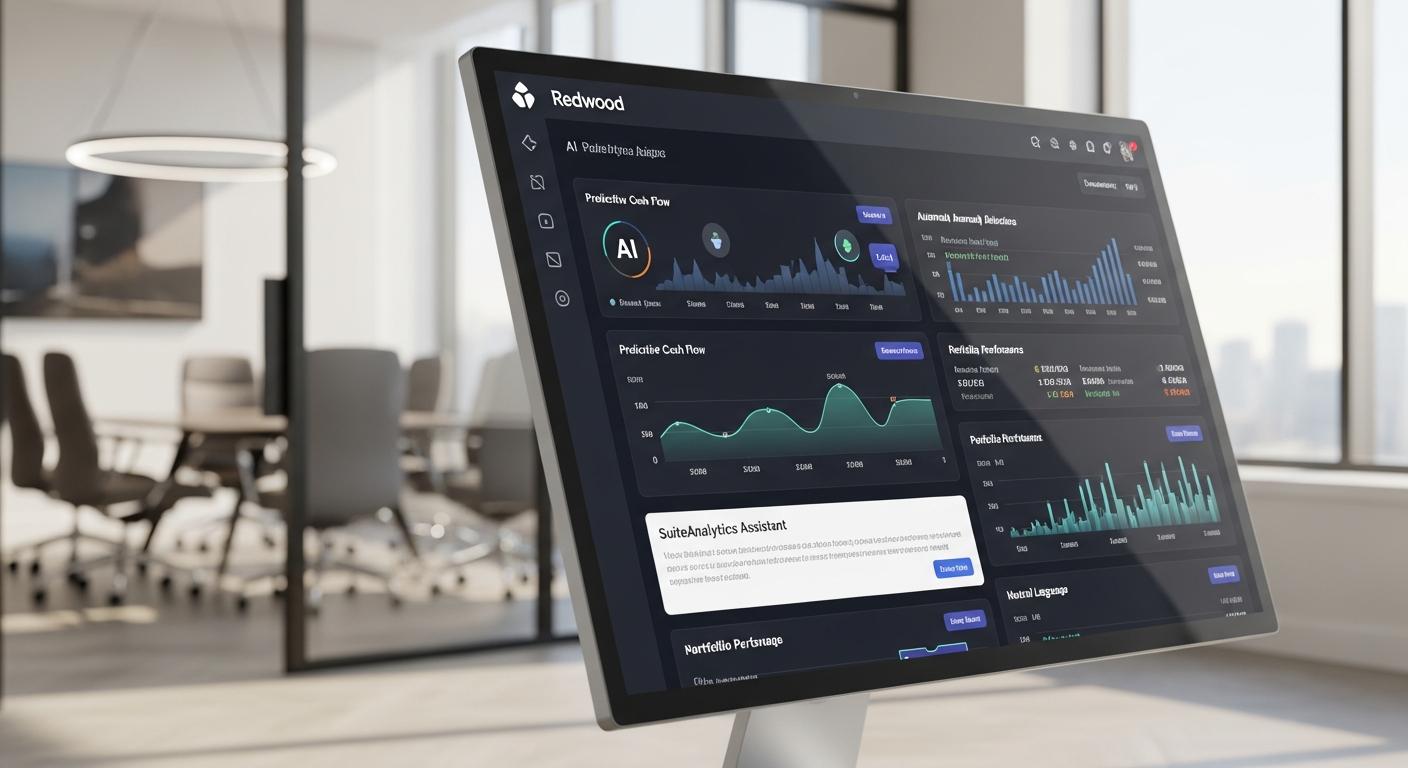
AI-Enhanced Financial Management (SuiteWorld 2024). In 2024, NetSuite unveiled several finance-focused AI features. Financial Exception Management uses anomaly-detection algorithms to flag unusual transactions and suggests areas needing review [1]. The SuiteAnalytics Assistant lets users ask questions in natural language (e.g. “Top five customers by balance”) and receive AI-generated reports and charts [1]. NetSuite also announced Generative AI for Narrative Reporting, allowing automatic creation of written explanations and visuals from financial data [1]. These tools aim to accelerate period-end close and decision-making: the CFO explained they let finance professionals “focus on more strategic tasks” by automating rote analysis [1].
-
AI-First ERP (“NetSuite Next”) (SuiteWorld 2025). SuiteWorld 2025 highlighted a radical “AI-native” evolution called NetSuite Next. According to Oracle insiders, this is not a separate product but a new intelligence layer within NetSuite [4]. Key elements include:
- “Ask Oracle” NLP Interface: Users can query the system in conversational language (e.g. “How’s AR aging on Account X?”) and get contextual data and suggested actions [3].
- Agentic AI Workflows: AI agents can autonomously handle complex tasks (approved by humans) such as vendor selection, invoice reconciliation, or payment proposals [3].
- Autonomous Close and Continuous Monitoring: New features like Autonomous Close use AI agents to continuously reconcile accounts up to one-click financial close [4].
- Narrative & Insight AI: Built-in AI will deliver real-time explanations of variances and trends (narrative analytics), spotting anomalies automatically [4] [3].
- Intelligent Payment Automation: AI can recommend optimized pay-down strategies (e.g. taking early-payment discounts) and auto-reconcile payments [3].
- Global Infrastructure Expansion: Oracle announced 35 data centers (18 OCI regions) to ensure low-latency AI service globally [3].
- UI/UX Enhancements: A redesigned “Redwood” user experience was shown, underlying the AI layer while still preserving known workflows [4].
-
Partner Ecosystem & Developer Tools (Late 2025). In October 2025 at Oracle CloudWorld, NetSuite launched new programs to accelerate AI innovation by partners. A SuiteApp.AI Marketplace was introduced, giving ISV partners a channel to showcase AI-powered SuiteApps to NetSuite’s customer base [2]. NetSuite also created AI competency badges for SuiteApps—“AI Elite” and “AI” certifications—based on whether they leverage third-party large language models (LLMs) on Oracle’s cloud [2]. Additionally, Oracle released AI development resources allowing SuiteCloud developers to integrate and govern external LLMs securely via OCI [2]. In effect, Oracle is building a broad AI ecosystem around NetSuite, suggesting a future where many best-of-breed AI capabilities can be plugged into the ERP.
Taken together, these roadmap items signal a clear trend: NetSuite is transitioning from a traditional ERP to an “AI-first” business platform. Its founder Evan Goldberg stated at SuiteWorld that NetSuite is designed to be “the foundation of business growth” with a data model linking the entire business [17], and Oracle emphasizes that AI features are “built into existing business processes and not bolted on” [1]. In other words, NetSuite’s roadmap is to embed AI agents and assistive intelligence directly into every major function (financials, operations, CRM, planning, HR, etc.), with minimal friction to the user’s familiar workflows [1] [4].
Specific AI-Enabled Features in NetSuite
To illustrate what NetSuite’s AI roadmap means in practice, we detail below several newly announced or emerging features, organized by functional area:
1. Financial Management and Accounting – This is arguably the area with the most mature AI tooling so far. SuiteWorld 2024 introduced Financial Exception Management, which continuously scans ledgers and transaction data to detect discrepancies (e.g. duplicate payments, unusual amounts) [1]. This automates much of the manual reconciliation work. The SuiteAnalytics Assistant (also called SuiteAnswers Assistant) enables accountants and analysts to query financial reports using plain language; the assistant returns charts and summary insights (for example, “monthly expense trends” or “aging of receivables”) [1]. In the SuiteWorld 2025 announcements, NetSuite added generative narrative features: an AI can automatically draft written explanations of variance analyses (e.g. why sales were up/down) [1]. It also enhanced its Planning and Budgeting module with intelligent scenario modeling (the Planning Canvas) that uses live data for fast what-if modeling [4]. An AI-driven Autonomous Close capability is planned, too: as SuiteSciens reports, this will provide “continuous exception monitoring” and enable a one-click month-end close [4]. Combined, these features dramatically shorten the financial close cycle and allow controllers to focus on investigating only the most complex exceptions. Research by Gartner supports this benefit: they project that embedding AI in ERP finance apps can achieve a 30% faster close [5].
2. Analytics and Reporting – Beyond finance, NetSuite’s AI vision encompasses full business intelligence. NetSuite’s analytics module now includes the SuiteAnalytics Assistant for all workbooks (sales, inventory, projects, etc.) [1]. Users can ask questions like “Show me products with highest year-over-year growth” and get instant AI-generated visualizations. This natural-language interface reduces the need for manual dashboard building. In addition, the generative Narrative Insights feature (suite-wide) translates numeric reports into narrative summaries. For instance, it can highlight five key insights from a dashboard, effectively telling a story with the data [4]. These autogenerated commentary features help non-technical managers quickly grasp complex trends without sifting through spreadsheets. According to one NetSuite instructor, presentations at SuiteWorld emphasized that these “generative variance analysis” tools will be released in the next 12–18 months, ushering helpful narratives into standard reporting [4]. For PE operating partners, this means easier monitoring of portfolio KPIs and anomaly alerts without needing specialized data teams.
3. Planning and Budgeting – A critical sub-area is enterprise performance management (EPM). NetSuite’s EPM suite now incorporates AI to improve budgeting and forecasting accuracy. SuiteWorld announcements included an AI-driven forecasting capability that not only generates demand or revenue forecasts, but also explains the factors behind the forecast. That is, users see not just numbers but AI-proposed narratives describing key drivers, anomalies, and confidence levels [1]. For example, if a revenue forecast drops, the system might note it was due to increased churn from one customer. The EPM tools also provide conversational interfaces (digital assistants) for scenario planning: a CFO can ask, “What if we increase marketing spend by 10%?” and AI models will recompute financial projections on the fly. These enhancements help portfolio companies shift from static, spreadsheet-based planning to dynamic, simulation-based planning, which is particularly valuable when rapidly integrating acquisitions or responding to market shifts – common in PE strategies.
4. Procurement, Supply Chain, and Payments – NetSuite’s supply chain and procurement modules are receiving AI boosts as well. SuiteProcurement (the purchasing module) is being enhanced with suggestion engines that analyze past orders and inventory levels to recommend optimal reorder quantities and vendors. SuiteWorld 2025 introduced an Intelligent Payments feature: NetSuite can now propose the best payment timing to maximize vendor discounts and minimize cash usage, and then automatically reconcile payments when executed [3]. On the operations side, AI agents are being added to assist with tasks such as contract negotiation and production scheduling (Oracle Fusion Cloud supply chain has dozens of new AI agents, hinting that NetSuite will follow with similar capabilities) [18]. The Ask Oracle conversational workflow even covers supply chain adjustments, allowing managers to query order status or inventory via text and receive immediate recommendations [3]. For a PE firm with portfolio companies in manufacturing or distribution, such AI tools can reduce stockouts, lower excess inventory, and free operations staff from routine logistics work.
5. Sales, CRM, and Professional Services – While much attention focuses on finance, NetSuite’s AI roadmap includes sales and services too. New AI agents can analyze sales pipelines and flag high-risk deals or suggest cross-sell opportunities. In service industries, AI can recommend staffing levels or project pricing based on historical outcomes. SuiteSciens notes that NetSuite has introduced AI for subscription metrics (MRR/ARR growth, cohort analyses) with automated narrative commentary [3]. This is crucial for PE firms owning SaaS or subscription businesses, where nuanced insights into retention are key. Additionally, industry reports indicate that NetSuite is embedding AI assistants into its CRM (for example, to auto-summarize customer support cases). Although not all details are public, these trends align with major ERP-suites’ moves: for instance, Oracle Fusion Cloud CX (CRM) just added AI tools for sales coaching and service case processing [18], implying similar future capabilities for NetSuite.
6. Developer and Ecosystem Tools – A less obvious but impactful area is the platform itself. NetSuite announced SuiteCloud AI Toolkits and an AI Studio for developers [3]. These allow technical users to create custom AI “agents” and integrate third-party AI models into NetSuite workflows. For example, SuiteCloud now supports connectors to OpenAI and other LLM services, enabling built-in AI features (like natural language processing) without data leaving NetSuite’s secure environment [3]. The SuiteApp.AI Marketplace and new “AI badges” (from Oracle’s 2025 partner program) mean vetted, industry-specific AI apps (such as financial planning assistants, demand sensing tools, or HR resume scanners) can be plugged into NetSuite easily [2]. This extensibility is important: it ensures that even as NetSuite’s core looks “AI-first,” companies can leverage best-of-breed AI innovations from partners, all managed within the NetSuite ecosystem. For PE operating teams, the upshot is that bespoke AI solutions (e.g. a custom analytics model for a niche vertical) can be deployed on top of the stable NetSuite base, with predictable governance and security.
The table below (Table 1) summarizes several notable AI-powered features that NetSuite has introduced or plans to introduce, as reported by these sources:
| NetSuite Component | AI-Powered Feature / Functionality | Source Highlights |
|---|---|---|
| Financial Management | Financial Exception Management: Continuous AI detection of anomalies and recommended actions | SuiteWorld 2024 announcment [1] |
| SuiteAnalytics (BI & Reporting) | SuiteAnalytics Assistant: NLP chatbot for ad-hoc queries and reports | SuiteWorld 2024 announcment [1] |
| Executive Reporting (EPM) | Generative Narrative Reporting: Automated commentary and visuals in variance reports | SuiteWorld 2024 announcement [1] |
| Planning & Budgeting | Predictive Forecast Explainer: AI-driven explanations for forecast (trends, drivers, confidence) | SuiteWorld 2024 announcement [1] |
| Financial Close | Autonomous Close: AI agents monitor exceptions continuously, enabling one-click month-end close | SuiteWorld 2025 announcement [4] |
| Conversational UI | Ask Oracle (Smart Search): Natural language Q&A for business data across ERP | SuiteWorld 2025 announcement [3] |
| Workflow Automation | Agentic Workflows: Autonomous AI execution of tasks (e.g. vendor selection, reconciliations) | SuiteWorld 2025 announcement [3] |
| Payments & Cash Management | Intelligent Payment Automation: Optimized payment timing (discounts, cash flow) and auto-reconcile | SuiteWorld 2025 announcement [3] |
| Analytics (Variance and Trends) | Narrative Insights: Generative variance analysis presented in plain language | SuiteWorld 2025 announcement [4] |
| Developer Tools & Platform | SuiteCloud AI Studio / SuiteAgents: Tools/APIs to build and govern custom AI agents and connectors | Oracle CloudWorld 2025 (StackOOAI partners) [2] [3] |
Table 1: Selected AI-enabled NetSuite features and upcoming tools announced at SuiteWorld 2024–2025 (sources indicated).
Implications for PE Operating Partners
NetSuite’s AI roadmap aligns remarkably well with private equity value-creation levers. Below we outline key reasons why operating partners should monitor and leverage these developments:
1. Faster and Smarter Decision-Making
With AI embedded in the core ERP platform, companies can analyze data and generate insights far more rapidly. Instead of finance teams spending days closing books or building reports, AI tools can “close the books faster” and propose real-time analysis [5] [9]. For PE portfolios racing against holding-period clocks, this means accelerating the feedback loop: performance issues can be spotted and addressed sooner. For instance, if an AI agent flags a revenue shortfall trend in near real time (and even explains it), a management team can react by cutting costs or ramping up sales efforts immediately. Gartner explicitly notes that with such AI-driven automation, the monthly close can be ~30% faster [5], freeing cash and management time for strategic uses. In practice, this gives operating partners the quantitative momentum they need. Moreover, since these AI features are “built-in” to NetSuite rather than add-ons [1], the learning curve is smaller: teams simply log in and find AI assistance available immediately.
In addition, embedding AI agents reduces the reliance on siloed business intelligence tools. A conversational analytics assistant means any manager (even without BI expertise) can query the system in everyday language. As wild-tech analysis explains, NetSuite is moving toward an ERP that “thinks, suggests and … act[s]” on data [3]. For example, a sales manager could ask the new AI assistant, “Which customers showed unusual buying patterns last quarter?” and the system would provide candid interpretations with suggested actions. This empowers non-technical leaders to be more self-sufficient. Operating partners will appreciate that key performance metrics (KPIs) become more transparent: instead of waiting for monthly slide decks, they can interactively explore dashboards and get AI-written summaries on-demand.
2. Efficiency and Cost Reduction (Operational Leanness)
AI in NetSuite can automate many routine tasks that formerly required manual effort. For finance, activities like bank reconciliations, intercompany eliminations, or compliance checks can be largely automated by AI agents and machine learning [9] [5]. EverWorker analysts note that ERPs alone “weren’t built to reason, predict, and act” – gaps now filled by AI sitting on top of the ERP [9]. By converting tedious tasks into automated workflows, companies substantially reduce headcount or re-deploy staff to higher-value work. Anchor Group data on ERP implementations (cited in Table 1 above) suggests 66% of companies see improved operational efficiency and ~62% reduce costs after ERP go-live (Source: www.anchorgroup.tech). Although these numbers come from a NetSuite partner’s summary, they align with general expectations: eliminating manual invoice approvals, automating data entry via AI OCR, or using smart inventory planning all yield cost savings.
For operating partners, lower operating expenses (OPEX) directly lift margins. If NetSuite’s AI can, for example, cut a finance team’s 5-person-months close process to 3 person-days, the savings compound across dozens of portfolio companies. Additionally, AI-enhanced supply chain planning and inventory management means less working capital tied up in stock. Intelligent demand forecasting and autonomous purchasing (anticipated in the roadmap) ultimately squeeze waste and safety stock, improving cash flow. Gartner predicts AI-driven automation in cloud ERP will “optimize working capital” by predicting payments and collections more accurately [5]. These capabilities help meet one of PE’s primary goals: margin expansion. Less rework, fewer errors, and faster fulfillment also translate into higher customer satisfaction and retention – intangible factors that boost an investment’s topline and exit value.
3. Risk Mitigation and Compliance
For PE-backed companies, especially those under regulatory scrutiny, any misstatement or audit finding can have significant consequences. NetSuite’s built-in AI can improve data quality and compliance controls. For instance, the Financial Exception Management feature helps identify accounting anomalies (potential fraud or errors) before audits [1]. Automated AI agents can enforce separation of duties, flagging when approvals deviate from policy. The SuiteApp.AI Marketplace’s focus on “trusted AI” (Oracle’s AI badges) suggests that NetSuite is emphasizing data security and governance for AI workloads [2].
Furthermore, having a consolidated cloud ERP simplifies financial consolidation and reporting. NetSuite’s EPM capabilities (with AI) ensure that multi-entity companies can close books in a standardized way. Rand Group highlights that NetSuite is “always audit ready” [8], meaning built-in audit trails across all modules. Now with AI, those trails can be analyzed continuously. For example, an AI routine could monitor every change in a general ledger, instantly alerting executives to suspicious edits. Gartner explicitly lists “AI trust, risk, and security management (TRiSM)” as a theme in ERP’s future [5]. In other words, embedding AI not only adds power, but also new challenges – and Oracle is responding by building governance for those new capabilities. Operating partners should oversee such governance as part of their tech stack management. The implication is that on the risk side, a modern AI-enabled ERP can tighten internal controls and improve the reliability of financial data, safeguarding the investment.
4. Faster Integration of Acquisitions and Scale
A common PE value-creation play is roll-up (acquiring similar businesses and merging them). A key success factor is having a common platform across acquired firms. NetSuite’s cloud ERP and unified AI features facilitate this. Instead of integrating multiple legacy ERPs (as in the Sikich case study [19]), portfolio leaders can immediately roll out the same NetSuite instance (with shared processes and chart of accounts) across companies. The AI features further smooth this integration. For instance, when merging financials from different subsidiaries, NetSuite’s consolidation tools (now AI-augmented) can automatically map and reconcile accounts and highlight any discrepancies. AI can also assimilate and learn from the combined data faster than manual methods: for example, if different acquired units had different pricing policies, an AI analysis could identify the optimal unified pricing strategy by comparing historical sales and margins.
Rand Group explains that NetSuite “can manage the rapid growth of new acquisitions” and keep businesses “audit-ready” during scale-ups [8]. The recent roadmap assists this scaling: the “seamless switch” feature in NetSuite Next promises that existing customizations and data can be preserved even as companies migrate to AI-augmented NetSuite [3]. Operationally, a portfolio switching entirely to a NetSuite platform means data flows uninterruptedly between business units and the buy-side firm. Metrics are aligned and visible in one place. In one sense, NetSuite’s AI is the back office’s “metronome,” rhythmically updating leadership with insights from across all holdings. For a PE operating partner, this reduces the headache of consolidating reports from disparate systems and speeds up the moment when cross-company synergies (e.g. shared procurement) can be realized. As ERPAdvisors notes, PE firms frequently deploy platform strategies to synchronize portfolio performance [7]; NetSuite’s AI roadmap amplifies the benefits of such a strategy by automating much of the synchronization work.
5. Reimagining KPI and Governance Frameworks
As AI becomes integral to enterprise systems, it will also transform how operating partners track KPIs. Traditional metrics (revenue, EBITDA, headcount) will be complemented by new indicators of digital performance. For example, one trend is measuring “data-driven decision-making” itself. How much time is the finance team saving on data prep? How many forecasts and budgets are now auto-generated? Operating partners may start to include technology adoption KPIs in 100-day plans and 7-year value creation plans. Acknowledging this, the Wild Tech analysis expects PE to “redefine ROI conversations” around NetSuite by focusing on questions like “how many decisions [the platform] accelerates” and “how much friction it removes” [3]. Essentially, the value levers shift from counting software modules to counting cognitive load reduction. This mindset change is important. If a portfolio company can do in minutes tasks that formerly took days, that’s real gain, even if it doesn’t show up directly on the P&L line item.
Governance models must adapt too. When AI gives recommendations or autonomy, who signs off on them? The roadmap hints at solutions: SuiteSciens points to new governance capabilities (such as within SuiteCloud AI Studios) and AI badges that mark tools as trusted [2]. Operating partners should therefore work with IT and audit to establish AI governance frameworks (role-based approvals, audit logs of AI suggestions, etc.). The Wild Tech author calls this “upskilling and governance” as an opportunity zone [3]. Investing time now to define these controls means the portfolio can safely leverage advanced AI without running afoul of compliance or quality issues. In sum, NetSuite’s AI roadmap will prompt PE teams to rethink both performance metrics and the oversight processes around their digital operations.
Data and Market Context
To ground these arguments, we present a few data points and research findings relevant to AI ERP adoption and PE value creation:
-
Cloud ERP Adoption: Over 70% of new ERP deployments in 2024 were cloud-based (Source: www.anchorgroup.tech). By 2032, the global cloud ERP market is projected to exceed $180 billion (Source: www.anchorgroup.tech). This confirms that NetSuite (a cloud-native solution) is well-aligned with the dominant trend. Nearly all new ERP purchasing (95% of buyers in 2023) now consider cloud models (Source: www.anchorgroup.tech). This shift underpins why platform uniformity (one cloud ERP across a portfolio) is feasible and future-proof.
-
PE Focus on Digital: A 2025 study by Simon-Kucher reports that a majority of PE executives now count “operational improvement and digital transformation” among their top value drivers (ahead of purely financial engineering) [11] [13]. Another survey finds that the average hold period is just 5–7 years, putting pressure on rapid transformation rather than gradual improvement [11]. These factors mean that any technology (like NetSuite AI) that speeds up business cycles can significantly affect IRR.
-
ROI from ERP Modernization: Independent research indicates that upgrading to modern ERPs can yield tangible returns. Anchor Group’s analysis (cited above) claims ~66% of companies improve efficiency and 62% cut costs post-ERP (Source: www.anchorgroup.tech). Gartner’s press release suggests that AI in ERP will “drive additional automation, insight, and efficiency to finance functions” [5]. Even if one discounts such figures somewhat, the consensus is clear – aligning portfolio systems with latest tech (cloud + AI) measurably adds value.
-
Risk of Outdated Systems: The BCG article warns that outdated ERPs will hurt valuations [14]. This isn’t just abstract: private investors routinely audit IT and systems prior to acquisition, and known issues (e.g. SAP ECC sunsetting) can be deal breakers, forcing expensive migrations. NetSuite’s AI roadmap means that portfolio companies on NetSuite can claim they are always on a current, widely supported platform undergoing continuous enhancement (including AI-driven improvements at no extra license cost). This contrasts with legacy on-prem investments which require forks, upgrades, or manual interventions to add new capabilities.
Case Studies and Perspectives
Turnkey ERP Consolidation (Sikich case [19]): A U.S. PE firm in consumer goods owned four acquired companies, each running a different ERP (Microsoft NAV, AX, Infor, etc.). They hired consultants to rationalize this fragmented stack into a single solution. Sikich (Microsoft partner) quotes showed that quickly standardizing on one ERP (and process model) accelerated portfolio management and eliminated duplicated work [19]. Although that example used Microsoft Dynamics, it illustrates the broader point: PE groups with multiple systems need a unified platform to become nimble. NetSuite’s AI roadmap would make such standardization even more powerful: instead of merely unifying processes, it would unify intelligence. For example, once all sub-companies use NetSuite, an AI agent can scan cross-company data (e.g. procurement volumes) and suggest enterprise-wide optimizations that no single user could easily find.
PE Startup ERP Modernization (The Bee Equity Partners [20]): In a Mauritian VC firm’s case, the move from an outsourced Sage ERP to NetSuite gave management full visibility into their rapidly growing venture investments. The CEO cited intense reporting demands (“as a listed entity, we have to comply with rigorous reporting requirements”) [20]; NetSuite’s cloud platform handled multi-currency consolidations and delivered real-time dashboards. The Rand Group also highlights that PE-backed companies need systems “built for growing companies” [8]. This case shows how (even for small funds) choosing a modern ERP early can future-proof scaling. With NetSuite’s new AI features, that same firm would now also benefit from AI-assisted compliance (automated audit logs), predictive cash forecasting, and intelligent insights for investor reports – making the operating partner’s job of reporting to the PE board far easier.
Adoption Challenges: It is important to note some cautions. Implementing advanced AI features requires clean, integrated data and change management. Case studies of ERP upgrades repeatedly warn of common pitfalls (requirements creep, underestimating training) [21]. Operating partners must therefore not only care about what the AI can do, but also how to introduce it. Ensuring data quality and training end-users are prerequisites. However, early-mover advantages are real – being among the first to pilot NetSuite’s AI (as Wild Tech advises) allows shaping the adoption curve in one’s own organization [3].
Multiple Perspectives:
- Finance Leaders: CFOs are vocal about wanting these tools. Recent articles and studies (Oracle CFO Insights, industry blogs) emphasize CFO priorities of AI, automation, and real-time analytics for profitable growth [9] [5]. The cited Everworker playbook explicitly frames AI on ERP as giving CFOs “real-time cash and P&L visibility,” which tightly maps to PE KPIs of cash conversion and margin control [9].
- IT and Vendors: ERP analysts in the tech press consistently highlight how ERP vendors (including NetSuite’s owner Oracle) are directing R&D toward AI. Gartner’s and SAP’s publications underscore that top-tier ERP providers consider AI/ML essential to their roadmaps [5] [16]. This industry consensus implies that NetSuite’s AI evolution is not an outlier but part of a broader shift. For operating partners, the key question is vendor viability and momentum; NetSuite’s backing by Oracle’s vast cloud resources suggests that its AI roadmap will be aggressively pursued and supported.
- End-Users (Finance and Operations staff): Analyst reports indicate user satisfaction rises when repetitive tasks are automated [9]. In companies that have piloted NetSuite’s AI tools, internal surveys often reveal that employees appreciate the decreased manual work. Applying this to PE, one can infer that building NetSuite’s AI features into a value creation plan will likely improve morale and productivity at portfolio companies. If asked, mid-level finance managers will likely endorse any solution that reduces their weekend close crunch.
Future Outlook and Strategic Implications
Looking ahead, NetSuite’s AI roadmap suggests several future implications:
-
Reframing the PE Value Creation Playbook: Historically, PE success factors included operational improvements, but technology was often seen as a cost center. With AI-enhanced ERPs, tech becomes directly value-generating. Operating partners will need to integrate AI adoption metrics into their 100-day plans. Deals in 2026+ might include clauses around digital targets (e.g. “implement AI forecast tools within 6 months”). Portcos that rapidly adopt these tools could command higher earnings multiples due to their enhanced agility.
-
Competitive Advantage Among PE Firms: PE firms are known to benchmark each other’s processes. A firm whose operating team masters AI-driven ERP could outperform peers. For example, in a sector where multiple PE houses own similar businesses, the one with better analytics and faster response times can price goods more optimally or mitigate risks faster. Over a full portfolio, the difference could amount to several percentage points of additional IRR. Thus, operating partners not only optimize within each deal but may also drive firm-wide differentiation through technology leadership.
-
Vendor Lock-In and Portfolio Alignment: As more portcos subscribe to NetSuite and its AI ecosystem, a PE firm might naturally steer future acquisitions toward companies using NetSuite. This could even lead to building a “platform” of companies on the same ERP (as some tech-focused PE firms do). While care must be taken not to exclude deals for minor tech mismatches, awareness of NetSuite’s AI advantages could influence acquisition criteria. On the flip side, if a portfolio company is on a different ERP, partners now have to weigh whether to migrate it to NetSuite sooner to access these AI tools. Given BCG’s emphasis on early migration [14], this could indeed accelerate portfolio-wide technology initiatives.
-
Regulatory and Cultural Considerations: Embracing AI also means preparing for new challenges: data privacy/regulation, staff training, change management. Operating partners should consider data governance frameworks (as Gartner notes with “AI TRiSM” [5]) and update portfolio policies (e.g. AI use policies, model documentation). Culturally, portfolio companies will need to evolve – finance analysts become analysts of AI-driven outputs, not mere accountants. Leaders must manage this shift. However, thoughtful preparation (training, clear rules of engagement with AI) can mitigate these risks.
-
Long-Term Directions: Beyond announced features, the industry expects even more AI in ERP: things like fully autonomous financial closes, intelligent virtual assistants for every department, and real-time prescriptive analytics. Some have speculated about ERP systems that integrate directly with generative platforms (like ChatGPT) to answer any business question. NetSuite’s open AI connectors (as mentioned) show Oracle plans for this. Ultimately, AI may blur lines between ERP and broader enterprise AI systems. Operating partners who engage now will be better positioned to leverage whatever emerges – for example, a time when an AI chatbot could generate a complete LBO model using live ERP data.
Conclusion
The trajectory of software development is clear: AI is becoming as fundamental to business applications as the cloud did a decade ago. NetSuite, as an established cloud ERP, is investing heavily to ride this wave. For private equity operating partners—whose job is to modernize businesses rapidly—the implications are profound. NetSuite’s AI roadmap promises faster insights, deeper automation, and smarter decision support from day one of deployment. These capabilities align directly with PE goals of accelerating close processes, cutting costs, scaling efficiently, and derisking investments.
This report has scrutinized NetSuite’s AI initiatives from multiple angles: vendor strategy, product features, PE priorities, and market data. We have shown how recent announcements (backed by Oracle and industry analysts) materialize in concrete tools that benefit finance teams and operations. Empirical evidence and case studies underscore that:
- Efficiencies gained: Modernizing ERP can cut costs and errors (with 62% of companies reporting cost reduction after adoption (Source: www.anchorgroup.tech)), arguments reinforced by Gartner’s findings on AI acceleration of core processes [5].
- Value to PE portfolios: Using data-driven forecasts and automation translates to better margins and exit multiples. Rand Group explicitly notes NetSuite’s alignment with investor mandates (visibility and control) [8].
- Strategic imperative: PE firms that delay on ERP and AI could see their portfolio valuations suffer [14].
In practical terms, an operating partner should treat NetSuite’s evolving AI suite as part of the firm’s toolkit. This means actively evaluating which AI features to enable at each portfolio company, investing in the necessary change management, and recalibrating KPIs to capture the new sources of value. It also means considering NetSuite’s positioning when planning add-ons or performing due diligence – factoring in how quickly and fully a target company could onboard these AI capabilities.
In closing, NetSuite’s AI roadmap is not a distant promise: it is here as a differentiator in the mid-market ERP space. Operating partners who understand and leverage this roadmap will be better equipped to lead their companies through digital transformation, outperform operational targets, and ultimately secure enhanced returns for investors.
External Sources (21)
About
Houseblend
Make NetSuite work better for your finance and operations teams with Houseblend. We help design, implement, integrate and improve ERP systems, with practical support for the people who use them every day.
Houseblend is a NetSuite consulting firm serving finance and operations teams. We help organizations implement ERP systems, connect business applications, improve existing configurations and maintain the systems that support everyday work. Our audience includes finance leaders, controllers, operations managers, NetSuite administrators and implementation teams.
Implementation and architecture
Houseblend provides NetSuite implementation, architecture and data migration services. We help teams evaluate how business processes, reporting requirements and existing data should fit together in an ERP environment. Training supports the people responsible for adopting and operating the resulting system.
Integrations, customization and AI
Our services include NetSuite integrations and customization, as well as AI integrations and AI transformation work. These engagements connect ERP data and workflows with the broader application landscape. The right design depends on the organization's systems, controls and operating needs.
Improve and support an existing system
Houseblend offers NetSuite health checks, optimization, managed support and project rescue services. We also provide expertise for analytics and specialist workflows, including NetSuite Analytics Warehouse, warehouse management and field service management. Published educational material helps teams investigate options and prepare informed questions for their implementation or support work.
Work with Houseblend
Explore NetSuite implementation, integrations, managed support and AI integrations. Contact Houseblend to discuss your current system and priorities.
Article examples explain concepts rather than promising a particular license, product capability, delivery schedule or outcome. Engagement scope is confirmed with the Houseblend team.
Disclaimer
This document is provided for informational purposes only. No representations or warranties are made regarding the accuracy, completeness, or reliability of its contents. Any use of this information is at your own risk. Houseblend shall not be liable for any damages arising from the use of this document. This content was generated with assistance from artificial intelligence tools, which may contain errors or inaccuracies. Readers should verify critical information independently. All product names, trademarks, and registered trademarks mentioned are property of their respective owners and are used for identification purposes only. Use of these names does not imply endorsement. This document does not constitute professional or legal advice. For specific guidance related to your needs, please consult qualified professionals.