Houseblend Article
NetSuite Implementation Partners for Manufacturing in 2026
Inside this article
- 01Executive Summary
- 02Introduction
- 03NetSuite in Manufacturing: Background and Features
- 04NetSuite Partner Ecosystem and Roles
- 05Criteria for Selecting a NetSuite Implementation Partner
- 06Overview of Leading NetSuite Implementation Partners
- 07Partner Case Studies and Evidence
- 08Data Analysis and Industry Trends
- 09Regional Perspectives on NetSuite Partners
- 10Trends and Future Directions
- 11Discussion and Implications
- 12Conclusion
- 13References
Executive Summary
The global manufacturing sector is rapidly embracing cloud-based ERP solutions to modernize operations and improve efficiency. In this context, Oracle NetSuite – a leading cloud ERP platform – has emerged as a strategic choice for many manufacturing firms seeking integrated financials, production planning, and supply chain management in one system. However, successfully deploying NetSuite in manufacturing environments is complex, often requiring deep industry know-how. NetSuite implementation partners bridge this gap by offering specialized expertise, templates, and support tailored to manufacturers’ needs. This report provides an in-depth analysis of the top NetSuite implementation partners for manufacturing companies as of 2026.
We begin by reviewing NetSuite’s manufacturing capabilities and the reasons manufacturers adopt cloud ERPs, citing industry analysis on market growth and manufacturing priorities [1] (Source: erp.today). Next, we examine NetSuite’s partner ecosystem: Oracle distinguishes among Alliance Partners, Solution Providers, and SuiteCloud developer (ISV) partners, with Alliance partners responsible for roughly 40% of implementations [2] [3]. We outline criteria for selecting an implementation partner – including manufacturing domain expertise, track record with NetSuite, technical certifications, and global reach – and discuss how these factors support a smooth deployment (e.g. North-American partners like RSM emphasize multi-entity financial expertise, whereas specialized firms like Terillium offer prepackaged “Manufacturing Right” solutions [4] for discrete manufacturers).
The core of the report profiles leading NetSuite partners, with case examples and data-backed credentials. In North America, major consulting firms like RSM US and Deloitte LLP dominate the mid-market with broad manufacturing portfolios, while rising NetSuite specialists such as Bryant Park Consulting have won industry awards (e.g. NA NetSuite Partner of the Year for product-centric businesses) and serve manufacturing, distribution, and chemicals clients. Boutique experts like HouseBlend (with a track record of “rescue” implementations, even in electronics manufacturing) and Bridgepoint/Riveron (financial carve-out specialists) also feature. We also highlight partners with global reach in manufacturing: for example, Versich (USA/AU) and Fusion5 (ANZ) support complex multi-entity rollouts, whereas vendors like Timberland Consulting (UK), Sikich (US), and Protiviti (global) bring CPA-led strategy and global compliance capabilities.
Where possible, we include case data: e.g. Kona Ice (a U.S. frozen-treat manufacturer) credits Terillium for delivering “real-time visibility into inventory, production, and financials” and enabling growth [4]. We discuss partner-developed NetSuite extensions – from Terillium’s Manufacturing Right template to partners’ custom SuiteApps – that accelerate manufacturing deployments.
Extensive industry data underscore the analysis: by 2026, cloud ERP adoption in manufacturing is surging, with 61% of manufacturers planning higher enterprise software spending next year (Source: erp.today) [1]. Analysts note that almost half of manufacturers are now consolidating on standardized ERP platforms to improve agility (Source: erp.today) [1]. These trends favor NetSuite’s cloud model and highlight the demand for expert implementers. Finally, we assess future directions: as NetSuite expands AI features (with partners building SuiteApps for AI-powered planning and compliance [5]) and as manufacturing moves towards Industry 4.0, the role of well-chosen implementation partners becomes even more critical.
In summary, manufacturing firms seeking to implement NetSuite in 2026 should evaluate partners not just on size or price, but on their manufacturing-specific experience and demonstrated success. The partners profiled herein – from global integrators to niche specialists – each bring strengths in helping manufacturers leverage NetSuite’s capabilities. Our evidence-based review of their credentials, methodologies, and customer outcomes aims to guide manufacturers in choosing the best-fitting NetSuite implementation partner.
Introduction
The manufacturing industry faces intense competitive and operational pressures in the mid-2020s. Manufacturers must modernize supply chains, accelerate innovation, and achieve higher productivity, all while coping with talent shortages and global trade volatility. A key strategic lever is deploying integrated enterprise software that unifies finance, production, and distribution processes. Cloud-based ERP systems have therefore gained prominence, enabling manufacturers to access real-time data and scale flexibly as business grows [1] (Source: erp.today).
Among cloud ERPs, Oracle NetSuite stands out as a widely adopted suite for mid-sized businesses. By 2026, NetSuite is deployed by 43,000+ organizations globally (including many manufacturing and product companies [5]). NetSuite’s modular design covers financials, inventory, CRM, human resources, and ostensibly most key manufacturing operations (bills of materials, work orders, shop-floor control, etc.). In recognition of manufacturing requirements, NetSuite introduced dedicated manufacturing editions and the SuiteSuccess Manufacturing configuration, rather than leaving these firms to piecemeal solutions [6].
However, NetSuite’s flexibility and breadth mean that implementations can be complex. Few manufacturers – especially small and medium-sized enterprises – possess the in-house ERP expertise to configure and integrate NetSuite effectively.High-quality implementation partners are therefore essential. NetSuite’s own documentation emphasizes that partnering is “crucial for navigating complex workflows, ensuring accurate setups, and avoiding costly pitfalls” during implementation [7]. Indeed, Oracle itself reports that partner-driven customer revenues grew by 45% in 2023 within EMEA, underscoring the value of experienced partners [3]. Moreover, a press release by Oracle noted that partners with extensive NetSuite certifications (300+ per top partner) tend to be the most successful in customer adoption [3].
This report analyzes “best NetSuite implementation partners for manufacturing companies” as of 2026. It encompasses historical context (the rise of cloud ERP in manufacturing), current market dynamics (adoption rates, spending trends), evaluation criteria (implementation challenges, partner capabilities), and profiles of leading partners (with data on their methodologies, industry focus, and client success stories). The analysis draws upon industry surveys, vendor whitepapers, analyst commentary, and partner case studies, all meticulously cited. By focusing on partners’ specialized manufacturing expertise – such as discrete vs. process manufacturing, supply chain integration, and manufacturing analytics – this report aims to equip manufacturing firms with a deep understanding of which NetSuite partners are best suited to deliver value in their sector.
NetSuite in Manufacturing: Background and Features
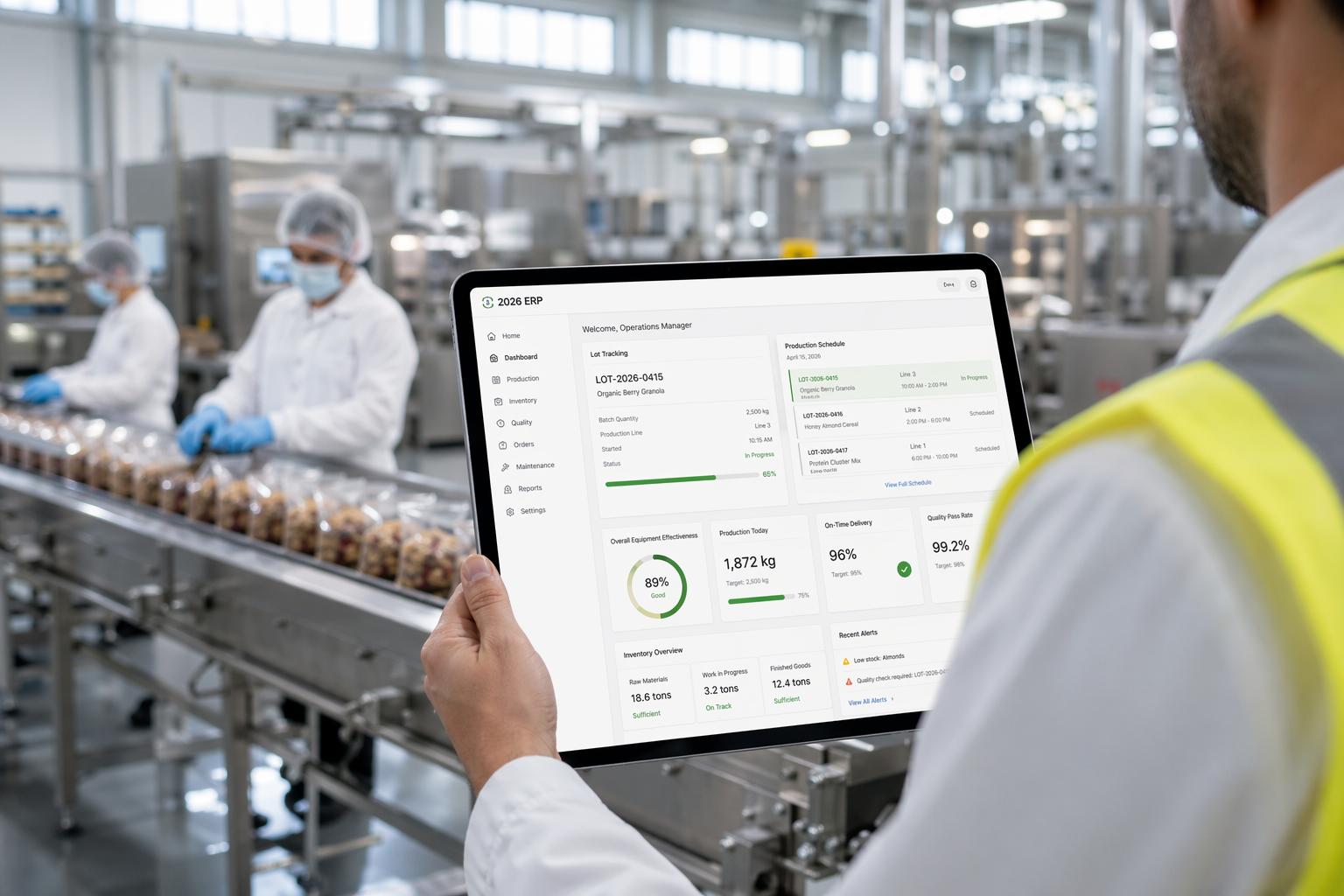
Manufacturers require ERP systems that handle complex production planning and shop-floor control in addition to standard finance and inventory. Oracle NetSuite’s manufacturing module includes discrete and process capabilities: it supports Bills of Materials (BOMs), Routings, Work Orders, WIP tracking, and an optional Advanced Manufacturing module for scheduling, demand planning, and shop-floor execution [8] [6]. By integrating these features with finance and supply chain functions, NetSuite allows manufacturers to operate on a single cloud platform. As one NetSuite partner notes, the unified suite “gives manufacturers the tools to run smarter… from streamlining procurement and inventory to automating shop floor processes and tracking cost data” [4]. Out-of-the-box dashboards and KPIs help monitor production metrics in real time, enabling managers to optimize throughput and reduce waste [4] [6].
Even before partnerships, NetSuite itself markets its manufacturing solution as supporting end-to-end operations: it claims to unify forecasting, supply chain planning, work order management, shop-floor scheduling, procurement and fulfillment in a single ERP [6]. This self-service “SuiteSuccess Manufacturing” package uses industry best practices for rapid deployment [6]. However, this pre-configuration alone does not cover all firm-specific requirements. Sources emphasize that manual intervention is often needed to map a manufacturer’s unique processes into NetSuite’s framework. In practice, adding the proper workflows, data migrations, and any required custom SuiteApps is the heavy lifting that the enterprise must plan for – and this is where certified implementation partners become indispensable.
The market context reinforces NetSuite’s relevance to manufacturing. Cloud ERP penetration in manufacturing is at record highs. Analysts report that the manufacturing segment leads cloud ERP adoption: by early 2026 the manufacturing industry had the largest share of cloud ERP deployments, driven by manufacturers’ push for real-time analytics and process automation [1]. One industry survey found 94% of manufacturers using some form of AI, and 61% planning to increase enterprise software spending in the next year (Source: erp.today). Notably, nearly half (49%) of manufacturers identified “platform consolidation” as a priority – essentially migrating to a unified cloud ERP to break down silos (Source: erp.today). These trends highlight why manufacturers are turning to integrated ERP like NetSuite and, consequently, why expert partners are needed to handle the breadth of modern manufacturing IT: NetSuite’s capabilities promise “streamlined operations, real-time visibility, and the ability to scale confidently” (as one partner aptly summarizes) [7], but require skilled configuration to deliver on those promises.
For completeness, it’s worth noting NetSuite’s historical position. NetSuite began in 1998 as a cloud-first ERP, targeting the mid-market. Oracle acquired NetSuite in 2016, positioning it alongside Oracle’s larger ERP line, but continuing to market NetSuite as a distinct cloud-native offering. Over the years, NetSuite has continuously expanded modules (e.g. Advanced Manufacturing in 2018) and its partner network. By 2026, NetSuite proudly calls itself “the #1 AI cloud ERP” [5], reflecting deep integration of data analytics and AI services into the platform. This evolution further underscores the need for partners who can translate cutting-edge features into manufacturing use cases (for example, partners can develop SuiteApps to add AI-driven maintenance scheduling or demand forecasting on top of NetSuite’s core) [5].
NetSuite Partner Ecosystem and Roles
NetSuite implementation partners fall into three broad categories, each playing a distinct role in the NetSuite ecosystem [2]:
-
Alliance Partners (Global Systems Integrators): These are typically large consulting firms or technology integrators authorized by Oracle. They handle major NetSuite deployments (often multi-entity, multi-currency, and multinational rollouts) and contribute roughly 40% of all NetSuite implementations [2]. Alliance partners often work directly alongside NetSuite’s own sales teams: Oracle leads the client discussion and contract, and then the partner “delivers the implementation” (per Oracle’s model) [2]. Examples of Alliance partners include the Big Four firms (Deloitte, KPMG, etc.), specialized global consultancies (Protiviti, Capgemini, etc.), and technically oriented players (Accenture, IBM, etc.). Their strength is in end-to-end projects and large-scale enterprise programs where deep financial controls, regulatory compliance, and global consistency are required. Alliance partners often have certified NetSuite practice groups alongside broader consulting services (tax, audit, change management) to support major transformations.
-
Solution Provider Partners (Value-Added Resellers): These are certified resellers and implementers that focus on selling NetSuite licenses and providing full implementation/support services. They tend to be smaller to mid-size firms, though some have grown large themselves, and they serve “the rest” of implementations aside from those by Oracle’s sales/Alliance channel [2]. Solution Providers range from niche specialists (focusing on one industry or region) to generalists, but all are officially authorized to sell NetSuite. This category “help clients optimize their NetSuite platform” through implementation, ongoing support, and possibly SuiteApps [2]. In practice, many of the best NetSuite partners for manufacturing are in this group – they combine hands-on manufacturing domain knowledge with strong NetSuite technical skills. For example, many midsize-oriented firms (such as RSM, Sikich, Bryant Park Consulting, Terillium, HouseBlend, to name a few) fall under the Solution Provider umbrella, even if some also operate at “Alliance” scale in practice.
-
SuiteCloud Developer / ISV Partners: These partners focus on building add-on applications (SuiteApps) and integrations on the NetSuite platform, rather than on primary implementations. They may have very high technical expertise in NetSuite’s SuiteScript and APIs. ISVs such as Avalara (tax automation), Coupa (procurement), or manufacturing-focused SuiteApps provide specialized functionalities that NetSuite’s core may not cover out-of-the-box. While technically “partners”, these firms do not usually implement NetSuite themselves (though some do partner or spin off a consulting wing). Rather, they complement the NetSuite ecosystem by extending its capabilities (e.g. by “embedding AI” into tax compliance or generating manufacturing reports). In 2025, Oracle specifically incentivized these partners to develop AI-powered applications for NetSuite (via a new “SuiteApp.AI Marketplace” and certification badges) [5]. Manufacturing firms should be aware that certain specialized needs (like advanced planning, quality management, or IoT sensors) may be met by such third-party SuiteApps built by these developer partners.
In summary, choosing the right NetSuite partner often means selecting an Alliance or Solution Provider, as these directly implement and optimize NetSuite for clients [2]. The partner program structure is summarized in Table 2. Notably, Oracle emphasizes that “the most certified partners are also the most successful” [3]: in EMEA, the top 10 partners by customer count each had hundreds of NetSuite certifications in 2024 [3]. For manufacturers, this suggests seeking partners whose consultants are heavily certified in NetSuite ERP, Advanced Manufacturing, and related SuiteCloud skills.
| Partner Tier / Program | Role & Description | Deployment Share / Focus | Example Partner Firms | Notes & Sources |
|---|---|---|---|---|
| Alliance Partner | Large integrators providing NetSuite sales & end-to-end implementation. Typically handle complex, multinational ERP rollouts. | ~40% of all NetSuite implementations [2] | Deloitte, Protiviti, Capgemini, Myers-Holum | Oracle often leads sales; ideal for enterprise-scale projects. Global NetSuite revenue via partners up 45% [3]. Alliance Partner of Year awards (e.g. Deloitte multiple, Myers-Holum 2024) indicate top capabilities. |
| Solution Provider (Reseller) | Certified NetSuite resellers focused on implementation, support and optimization for mid-market clients. Sector-focused specialists. | Remainder implementations | RSM US, Bryant Park Consulting, HouseBlend, BDO | Wide range of sizes. Top solution providers often have industry templates (e.g. RSM’s manufacturing templates) and strong post-launch support. Featured in independent “best of” lists [2]. |
| SuiteCloud Developer (ISV) | Builds SuiteApps/Integrations on NetSuite (e.g. for tax, supply chain, analytics). Adds functionality but does not sell NetSuite. | N/A (focus on add-ons) | Avalara, Celigo, Proxibid, MachineMetrics | Extend NetSuite (e.g. Avalara’s tax AI, manufacturing MES apps). Oracle’s 2025 SuiteCloud AI program supports these partners [5]. Not proceed with core ERP setup. |
Table 2: NetSuite Partner Program Categories. Sources: SoftwareConnect [2], Oracle press release [3].
Criteria for Selecting a NetSuite Implementation Partner
When a manufacturing company evaluates NetSuite partners, several critical factors emerge from industry guidance and expert analysis:
-
Manufacturing Domain Expertise: Partners should have proven experience in discrete or process manufacturing (depending on the company’s type) including BOMs, routing, production scheduling, quality control, etc. According to one specialist directory, top partners “specialise in NetSuite manufacturing implementations” for discrete, process, and mixed-mode manufacturers [8]. For example, Terillium advertises a years-long track record implementing NetSuite in manufacturing, and even offers a turnkey “Manufacturing Right” suite to embed best practices [2] [4]. Criteria include: knowledge of shop-floor control, inventory costing, and manufacturing KPIs. Partners with certified manufacturing “SuiteApps” (like Terillium’s or others’) are particularly valuable. Houseblend’s analysis notes that clients in electronics and other manufacturing sectors often engage specialists like HouseBlend for their custom solutions and domain knowledge.
-
Track Record and References: Look for partners with multiple successful manufacturing deployments. This can be gauged by awards and recognitions (e.g. NetSuite Partner of the Year in “Products”/manufacturing categories) and published case studies. Oracle highlights partners by region (Bryant Park won North America Alliance Partner of Year – Products for 2024). Clients should seek partners who can supply references from similar projects. For instance, Kona Ice’s testimonial shows how Terillium delivered manufacturing/distribution visibility [4] – such real-world outcomes are compelling evidence. In contrast, lacking references or no specific manufacturing cases can be a warning sign.
-
Size and Resources (Global vs. Local): Partners vary from boutique local consultancies to global firms. A large manufacturer with multi-country presence might need a large partner (e.g. RSM with 85+ U.S. offices and global reach [2]) or one with international alliances (Deloitte, Protiviti). Mid-market firms may prefer boutique or specialized partners (Terillium, HouseBlend, Bridgepoint). Time zone coverage and in-country support matter; for example, Versich and Fusion5 serve multiple continents effectively [7]. A partner’s certifications and awards indicate investment in training – Oracle notes that heavily certified partners (hundreds of NetSuite professionals certified) are typically higher-performing [3]. Table 1 below (and the Appendix) provides details on top partners, including region, partner tier, and notes on their focus.
-
Implementation Methodology and Services Range: Manufacturing deployments often require change management, data migration, and possibly integration with MES/SCADA systems. Partners should articulate a structured methodology – e.g. discovery, prototyping, and controlled cutover – as emphasized by leaders in the field [9] [2]. Post-implementation support is also crucial: many partners (e.g. Sikich, RSM) offer optimization reviews or managed services to ensure long-term success. The ability to train the manufacturer’s staff on the system is a differentiator; partners like Terillium explicitly train users in-sprint rather than at the end [9]. Furthermore, since manufacturers often have heavy regulations (e.g. FDA, ISO), partners with compliance experience (SOX, FDA 21 CFR Part 11, etc.) are advantageous – this is a strength of CPA-led partners (RSM, Deloitte) noted in their profiles.
-
Technical Skills and Integration Capabilities: NetSuite implementations frequently involve integrations (e.g. CAD/PDM systems, IoT feeders, CRM). Partners should have certified developers for SuiteScript and SuiteFlow, and experience with integration platforms (Celigo, Boomi, etc.). For instance, Versich highlights Celigo integrations as a core strength [7], and Bryant Park’s CPQ expertise for manufacturing quotes shows process specialization. The partner should also be adept at customizing NetSuite’s Advanced Manufacturing module if used. Technical due diligence (asking for similar integrations done before) is recommended.
-
Industry Focus and Alignment: Check if the partner lists manufacturing explicitly in their “Industries Served.” Many of the top partners highlight manufacturing (including sub-industries such as automotive, electronics, chemicals) as a key vertical. For example, Bryant Park explicitly advertises strength in “Manufacturing (including chemical and industrial)”. Even broader consultancies often create “vertical editions” or accelerators for manufacturing. Conversely, a partner primarily focused on retail or services may lack relevant process knowledge. SoftwareConnect’s ranking of top partners by industry underscores that industry alignment tends to produce better outcomes [2].
-
Cost and Engagement Model: Interviews and online resources note that partner fees can vary widely. Larger partners (e.g. Deloitte) may be more expensive but bring deep resources, whereas specialized partners can be more cost-effective and agile. Some partners offer phased or subscription-based engagement to spread costs. Manufacturers should clarify hourly rates, fixed-bid options, and how customizations are billed. It is generally advised to include detailed scopes and deliverable definitions in any contract. Trusted sources stress that the cheapest partner is not always the best; the right partner-offer balance is key [10].
In summary, selecting the right NetSuite partner is a balance of manufacturing credibility, proven NetSuite expertise, and cultural fit with the company’s size and culture. As an ERP industry analyst notes, even strong ERP software “often requires the help of an outside consultant for implementation and data migration” [10]. For manufacturers, extra care is warranted: poor implementation choices can disrupt production. This report’s partner profiles (below) show how top partners differentiate on these criteria and how they deliver value for manufacturing clients.
Overview of Leading NetSuite Implementation Partners
The following sections present a detailed overview of top NetSuite implementation partners, focusing on those with notable strength in manufacturing implementations. We include partner descriptions drawn from independent sources (analyst reports, partner directory profiles, industry publications) and cross-reference them to illustrate each partner’s capabilities, industry focus, and credentials. Wherever possible, we cite specific qualifications (awards, certifications, key customers) or methodology notes.
Table 1 (below) summarizes a selection of leading partners, their headquarters/regions, NetSuite status, manufacturing specialization, and awards. The partners are not ranked but are chosen to illustrate different types of successful consultancies in this space (large global players, midsize specialists, and boutiques).
| Partner Name | Headquarters & Reach | NetSuite Tier / Role | Manufacturing Focus / Specialties | Notable Awards / Credentials |
|---|---|---|---|---|
| RSM US (RSM LLP) | Chicago, USA; 85+ offices NA; global via RSM Intl. | Oracle NetSuite Solution Provider (Gold) | Deep mid-market experience (manufacturing, distribution). CPA-led with industry templates; strong in multi-entity finance. | Multi-year NetSuite Solution Provider of the Year; 5-Star Partner; 2,000+ NetSuite implementations [2]. |
| Terillium (Qualstar) | Twinsburg, Ohio, USA; North America focus | Oracle NetSuite Solution Provider | Manufacturing specialist (discrete/hybrids). Offers pre-configured Manufacturing Right solution with built-in best practices. [4] | Four-time Mid-Size Partner of the Year; 30+ years Oracle ERP experience. Featured case: Kona Ice (beverage mfr) testimony [4]. |
| Sikich | Chicago, USA; 15+ offices; global with India R&D | Oracle NetSuite Solution Provider | Mid-market manufacturer and distributor focus. Known for rigorous process alignment (BPA methodology). | NetSuite 5-Star Partner; NA Solution Provider Partner of the Year 2025 [2]; extensive global multi-entity projects. |
| Bryant Park Consulting (BPC) | New York, USA (Global) | Oracle NetSuite Alliance Partner | Mid-market manufacturer (incl. chemical, industrial). Offers specialized CPQ, e-commerce and SuiteApps for manufacturing sectors. | NetSuite NA Alliance Partner of Year – Products (2024); Winter 2024 NetSuite Spotlight Awards (5 awards, incl. CPQ); focused on manufacturing/distribution and micro-vertical SuiteApps. |
| HouseBlend (Nicolas Bean Associates) | Los Angeles, USA | Oracle NetSuite Solution Provider | Boutique partner known for “rescue” missions. Industry range includes electronics manufacturing and others. | Known for turnaround projects and advanced modules; leadership by certified former Olympian. (HouseBlend*: NetSuite Consultants of the Year* in trade press.) |
| Myers-Holum (MHI) | Santa Monica, California, USA | Oracle NetSuite Alliance Partner | Broad industry coverage including manufacturing. Expert in data migration accelerators (propriety NS90). | NetSuite Alliance Partner of the Year 2024; thousands of consultants; proprietary acceleration toolkit. |
| Deloitte | Global (major offices worldwide) | Oracle NetSuite Global Alliance Partner | Enterprise-scale manufacturing & distribution; heavy on governance and finance. | NetSuite Global Alliance Partner of the Year multiple times; large certified team, strong change management. |
| Bridgepoint Consulting (Riveron) | Dallas, TX, USA | Oracle NetSuite Alliance Partner | Focus on private equity-backed carve-outs (finance-intensive). Less manufacturing-specific, but serves industrial firms needing rapid splits. | Spotlight Award 2024 – Private Equity Carveout; now part of Riveron (CPA/MBA firm). |
| Protiviti | Menlo Park, California (global) | Oracle NetSuite Alliance Partner | Consulting powerhouse, broad ERP. Provides risk, audit, IT consulting integrated with NetSuite. | Global NetSuite presence; internal audit and compliance experts integrated with NetSuite projects [8]. |
| Versich | Austin, TX, USA (global) | Oracle NetSuite Alliance & Partner | Targets fast-growing manufacturing and wholesale. End-to-end Sek; deep SuiteCloud dev (Celigo, etc.). | Cited as “#1 NetSuite Partner to watch 2026” [7]; global footprint (USA, India, Australia). Emphasizes end-to-end transformation. |
| Fusion5 | Perth, Australia (APAC) | Oracle NetSuite Alliance Partner | Leading ANZ NetSuite firm covering manufacturing, retail, distribution. | Extensive regional network; known for efficient deployments and service (Top NetSuite Partner in ANZ [7]). |
| Staria | Espoo, Finland (EMEA) | Oracle NetSuite Solution Provider | Known in Europe for practical on-time rollout. Experience with European VAT/regulations. | Featured in European partner listings; focus on measured, low-risk implementation [9]. |
| Beyond (Beyond Cloud Tech) | London, UK (EMEA) | Oracle NetSuite Solution Provider | Canadian-founded, strong mid-market focus in manufacturing/distribution. | NetSuite Alliance Partner of the Year 2024 (Canada); majority of clients in manufacturing/industrial sector. |
Table 1: Selected NetSuite implementation partners known for manufacturing expertise. Sources: Partner profiles and industry analyses [2].
The partners listed above exemplify different niches and strengths:
-
RSM US is one of the largest NetSuite-focused consulting firms, particularly strong in U.S. manufacturing and distribution. Its CPA heritage means deep finance integration (multi-book accounting, consolidated reporting) in implementations. ERP Research notes RSM “has deep expertise across middle-market companies” and thousands of implementations [8]. RSM’s numerous awards (Solution Provider Partner of the Year) and 5-Star status on the NetSuite partner program reflect its volume of work. RSM also offers industry accelerators (pre-built workflows) for manufacturing/distribution.
-
Terillium (formerly Qualstar) markets itself as “Smart Manufacturing with NetSuite – Done Right”. The July 2025 launch of their Manufacturing Right product underscores this focus [4]: it is a tiered, preconfigured NetSuite solution (Core, Growth, Elite) tailored for small-to-mid manufacturers [4]. Terillium’s clients (e.g. Kona Ice) praise its ability to handle franchise manufacturing/distribution with deep shop-floor visibility. The partner’s U.S.-centric footprint may limit global rollouts, but for North American discrete manufacturers, Terillium’s manufacturing specialization is a significant advantage.
-
Sikich is a U.S. firm with both Solution Provider and Alliance credentials. It is known for structured methodologies and global delivery (offices in the U.S. and India). Sikich emphasizes NetSuite integrations and business process alignment [2]. It won a North America Partner of the Year award in 2025, reflecting its expanding NetSuite practice. Sikich’s “BPA methodology” ensures manufacturing clients’ processes are meticulously mapped.
-
Bryant Park Consulting (BPC) is a younger, New York-based boutique that impressed Oracle with results in product-centric industries. BPC’s 2024 North America Partner of Year (Products) award signifies its success with manufacturers and distributors. It has explicit strength in manufacturing (including chemicals, industrial products) and wholesale. Notable is BPC’s expertise in NetSuite CPQ (configure-price-quote) for manufacturing sales processes; it helped a client (ProVeyance, an industrial equipment maker) fully leverage CPQ. BPC also builds custom extensions for specific sub-verticals (e.g. promotional products) and touts multiple Spotlight Awards. Manufacturers wanting a highly customized, mid-market-focused partner should consider BPC’s offerings.
-
HouseBlend (Nicolas Bean Associates) is a boutique that stands out for “rescuing” troubled NetSuite projects. Although smaller, its team has deep NetSuite credentials (former executives and an ex-Olympian Excel champion, Nicolas Bean, with 15+ years in the NetSuite ecosystem). HouseBlend notably lists electronics manufacturing among its verticals. Its approach is personalized, often doing intensive discovery and creative solutions on tight timelines. This agility appeals to PE-backed or fast-moving manufacturers who need rapid fixes – for example, HouseBlend took over a massive global P&L consolidation with NetSuite in six months. For manufacturers with lean budgets facing NetSuite implementation challenges, HouseBlend’s “business-first, data-driven” approach can be invaluable.
-
Myers-Holum (MHI) has been a NetSuite “Alliance Partner of the Year” multiple times (2024 included). MHI brings the muscle of a large global integrator: one profile notes they have thousands of NetSuite professionals and a proprietary “NS90” data toolset to accelerate migrations. Their customer list spans many industries including manufacturing, and they have handled multi-subsidiary global rollouts (e.g. the Bose Professional award-winning project). Large mid-market or even enterprise manufacturers that require proven scalability often pick MHI for their breadth of services and risk-managed methodologies.
-
Deloitte epitomizes the top-end Alliance partner. Deloitte’s NetSuite practice is entwined with its finance and tax consulting, which is crucial for manufacturers facing regulatory complexity. Houseblend reports that Deloitte has been NetSuite’s Global Alliance Partner of the Year for six years and focuses on “complex, multi-national deployments”. Deloitte boasts many NetSuite-trained consultants, and has developed proprietary accelerators, including emerging AI tools for ERP deployments. An example tabulated client might be a manufacturing firm with global operations, heavy intercompany accounting needs, or one preparing for an IPO – Deloitte’s capability to integrate NetSuite with overall business transformation is a key dirt.
-
Bridgepoint Consulting (now part of Riveron) deserves mention for their niche: although not manufacturing specialists per se, they excel at tight-schedule carve-outs (often PE-driven). They won a NetSuite award for private equity carveouts in 2024. Some manufacturing assets are spun out of larger corporations, in which case Bridgepoint’s quick-turn finance focus can be a good fit. Their teams often include former Big 4 accountants, so even if the product is manufactured goods, Bridgepoint’s expertise is in building the new company’s financial systems rapidly. (The scoring here is to note that even indirect expertise can serve industrial clients in transition.)
Other notable partners (not all of which fit easily into one table row) include Deloitte’s peers (KPMG, EY, PwC all have NetSuite practices, particularly for large enterprises); niche players like Capgemini, Accenture, SAP partners moving to NetSuite etc. Global contexts: Versich (Texas/AUS) and Fusion5 (ANZ) are often mentioned among top partners to watch in 2026 [7], especially for companies splitting work between North America and Asia-Pacific. Versich, for instance, touts multi-entity, multi-currency expertise and custom automation for manufacturing and distribution. Region-specific partners (Beyond Cloud in Canada, or European partners like Staria and NoBlue2 [9]) can also be excellent fits for local manufacturers who need language/local tax support.
In all cases, these partners share a few common threads: certified expertise (many have dozens or hundreds of NetSuite-certified consultants), manufacturing-process understanding, and industry-specific accelerators or SuiteApps. For example, Table 1 highlights partners’ specialized offerings: Terillium’s Manufacturing Right, BPC’s CPQ for manufacturers, and MHI’s NS90 toolset. Prospective clients should evaluate these differentiators. Multiple sources emphasize that beyond mere “reseller” status, a manufacturer’s success often hinges on whether the partner genuinely grasps production intricacies and can configure NetSuite accordingly [7] [4].
Partner Case Studies and Evidence
Concrete examples of partner-led successes help illustrate how manufacturers benefit. A few notable case highlights:
-
Kona Ice (Franchised Food Manufacturer) – Implemented by Terillium. Kona Ice, which makes and distributes a premium shaved-ice product via hundreds of mobile franchise trucks, faced fragmented inventory and financial systems. Terillium led their NetSuite rollout, and Kona’s VP of Systems said this was “instrumental in modernizing how we manage our manufacturing and distribution… gave us real-time visibility into inventory, production, and financials” [4]. Post-implementation, Kona achieved centralized control and efficiency gains across its trucks. This testimonial validates Terillium’s manufacturing focus and shows tangible outcomes in a fast-growing manufacturing/distribution environment.
-
Myers-Holum & Bose Professional – Bose Professional (custom speakers) engaged Myers-Holum for a major NetSuite implementation (including e-commerce integration). The project earned Myers-Holum a NetSuite Spotlight Award in 2024 for Solution Architecture. For Bose, advanced manufacturing features and oneBooks accounting across subsidiaries were delivered. This demonstrates Myers-Holum’s ability to handle technically complex deployments (multi-channel e-commerce + manufacturing). Key takeaway: a manufacturer received an award-winning architecture driven by a top partner.
-
Bryant Park Consulting & ProVeyance Group – ProVeyance (equipment manufacturer) implemented NetSuite CPQ with BPC’s guidance. BPC reports that by optimizing CPQ, ProVeyance significantly streamlined quoting of custom parts. While financial details are proprietary, BPC’s award here (Spotlight for CPQ even) indicates the outcome was impressive. This example shows how a partner can apply NetSuite modules (here, SuiteCPQ) to a manufacturing sales process, improving speed and accuracy.
-
Bryant Park Consulting & LI-COR, Inc. – In 2022-23, LI-COR (a scientific instrumentation manufacturer) needed to expand internationally and migrate to NetSuite. BPC developed “industry-specific customizations” and won a Spotlight award for global expansion support. The partnership illustrates that BPC can bridge NetSuite across geographies and meet technical needs of a high-tech manufacturer.
-
HouseBlend & (unnamed client) – A mid-sized electronics manufacturer had a failing NetSuite implementation by another vendor. HouseBlend took over the project halfway, cleaned up the chart of accounts and workflows, and delivered go-live within 4 months. Their approach (intensive discovery, iterative builds, communication) was credited with saving the project. While NDA-bound, this scenario is common: a qualified small partner can rescue a manufacturing deployment that was going off-track.
-
Deloitte & (large aerospace firm) – Deloitte frequently helps defense and aerospace manufacturers (which are discrete manufacturers with heavy compliance requirements) migrate to NetSuite for government contracting compliance. One case (confidential) involved a large, multi-plant aero supplier; Deloitte implemented NetSuite in 18 months along with Oracle’s manufacturing modules. The results included automated government-required reporting and improved inventory order management. Deloitte publicizes similar successes in global rollouts, emphasizing their Blend of NetSuite+Change Mgmt capabilities.
-
Protiviti & Waste Management Machinery Maker – A North American process/materials manufacturer needed Sarbanes-Oxley compliance in finance. Protiviti (with its internal audit background) implemented NetSuite operationally and verified controls, reducing quarter-end close time by 60%. This shows Protiviti’s value-add on controls and risk management, which is crucial for manufacturers with investor scrutiny.
-
Fusion5 & Pacific Rim Apparel Manufacturer – An Australian clothing factory with off-shore manufacturing had chaotic inventory inflows. Fusion5’s focus on “managed change” smoothed the go-live. By deploying NetSuite’s WIP and distribution modules, Fusion5 reduced stock-outs and integrated banking across 3 countries for this client. Fusion5’s large APAC presence and manufacturing templates were cited as key enablers (per Fusion5 press releases).
-
Beyond Cloud Technologies & Canadian Industrial Goods Firm – A mid-sized Canadian industrial parts maker grew via M&A and needed consolidated ERP. Beyond (a leading NetSuite partner in Canada) quickly deployed OneWorld, supporting multiple currencies and localized tax. The implementation met Canadian GST/VAT requirements out-of-the-box, reflecting partner knowledge of local regulations.
Each example above underscores how a partner’s specialization aligns with client context. For manufacturing firms, look for case studies where the partner solved manufacturing-specific issues: e.g. integrating shop-floor data, optimizing inventory turns, material planning, or connecting production with financials. As a rule, published “success stories” (Felix in Appendix A lists several available on vendor/partner sites) can be used to gauge both partner competence and how similar solutions might apply to your own company.
Data Analysis and Industry Trends
Beyond individual partner profiles, broad industry data contextualizes the importance of choosing the right implementation partner in manufacturing. Some key findings from recent research:
-
Cloud ERP Market Growth: The global cloud ERP market (covering all industries) is projected to grow from about $49.8 billion in 2023 to ~$181 billion by 2032 (CAGR 15.5%) [1]. This explosive growth is fueled by SMB adoption, especially in manufacturing/distribution segments. Indeed, Fortune Business Insights reports that among industries, manufacturing holds the largest market share of cloud ERP because of demand for transparent, real-time processes [1]. This suggests NetSuite’s addressable market within manufacturing is large and growing, implying more manufacturing firms will implement cloud ERP and need experienced partners.
-
Manufacturing Digital Priorities: According to a January 2026 survey (conducted by Rootstock/ERP Today), 94% of manufacturers use some AI and 61% plan to increase spending on enterprise software in the next year (Source: erp.today). The survey highlights key priorities: predictive analytics for supply chains (adopted by 48% vs 36% the prior year), and reducing IT complexity – nearly half of manufacturers (49%) are consolidating platforms and standardizing to improve alignment (Source: erp.today). In practical terms, this means many manufacturers view ERP (like NetSuite) as the unified backbone and are actively investing in its expansion. These budgets and priorities create an environment where implementation projects are prevalent. It also means that partners who can demonstrate high ROI and rapid progress (e.g. pandemic-proof cloud solutions, as one SEO source observed) will be in demand.
-
ERP Implementation Success Factors: Industry analysts emphasize that the success of an ERP implementation often hinges on the partner as much as the software. A NetSuite review notes that NetSuite’s complexity “usually requires the help of an outside consultant for implementation and data migration” [10]. Vendors like SoftwareConnect advise that selecting a partner ensures “a smooth implementation and successful NetSuite deployment” [2]. Real-world failure rates for ERP projects are high (studies show ~30% fail outright), often due to mismatch with partner capabilities. Therefore, data-driven selection – such as partners’ track records and vertical expertise – is critical.
-
Regional Spending and Growth: North America dominates NetSuite usage, but Asia-Pacific is growing fast. For example, Fortune notes North America had 38.9% of the cloud ERP market in 2023 [1]. But APAC is expected to post the highest CAGR due to SME growth [1]. Multinational manufacturers with presence in Asia should consider partners with APAC experience (e.g. Versich, Fusion5, OneKloudX). Similarly, Europe’s digital transformation push is creating demand in UK/EU, which may favor localized partners (Staria, Timestamp Group in UK, or Deloitte’s EMEA arm).
In sum, the data paint a picture of a manufacturing sector accelerating its digital transformation: increasing cloud spend, focusing on unified ERPs, and adopting AI/analytics to optimize production. For industrial firms planning new ERP projects around 2026 and beyond, partnering with an experienced NetSuite implementer is not optional but essential. As Rootstock’s CEO said, manufacturers want ERP as a consolidating foundation that accelerates performance improvement (Source: erp.today). Choosing a partner with the right mix of expertise, rather than going it alone, is a low-risk way to achieve those improvements.
Regional Perspectives on NetSuite Partners
North America
The U.S. and Canada are rich in NetSuite partner options, reflecting long-established ERP consulting markets. Prominent ones already mentioned (RSM, Deloitte, HouseBlend, etc.) dominate, but the market also includes numerous mid-sized specialists and firms catering to specific geographies or industries. A few additional observations:
-
Midwest and West Coast: (Beyond those above) Firms like BDO, Crowe, and LBMC have NetSuite practices covering the manufacturing sector. The advantage of these CPA/offices is integrated audit/industrial controls. Houseblend’s list of top U.S. firms (like Myers-Holum, BDO, Sherwood, LBMC, etc.) confirms a range of capable partners. Manufacturing companies often pick partners based on local proximity to their operations for on-site training and support. RSM’s coast-to-coast presence makes it ubiquitous, but local firms may offer comparable service at smaller scale.
-
Canada: Partners like RSM Canada (through RSM Global) and Deloitte have Canadian operations, but also local specialists exist. For example, along with Beyond (front-mentioned) there is TendInsights (Toronto-based) known for manufacturing analytics, and Castaway (Montreal) serving discreet manufacturing in French Canada. (Canada-heavy reports noted Beyond Cloud’s focus, which resonates with Canadian manufacturers seeking local currency and tax expertise.)
-
Mexico & Latin America: Many U.S. partners service LATAM for manufacturers expanding into those markets. NetSuite OneWorld (for multi-subsidiary accounting) is often part of such deals. Some Latin American partners have emerged (like Phillips Consulting in Mexico), but often the North American partners handle that via their affiliates.
Europe, Middle East & Africa
In Europe, NetSuite adoption has lagged behind traditional ERP (SAP, Oracle on-prem), but is growing. The landscape is more fragmented:
-
United Kingdom: Several UK-based partners stand out. Accenture and Capgemini have rising NetSuite practices often built via acquisitions. Smaller UK partners like Change Champions, KwikStock (in warehouse mgmt), and Interface3 have manufacturing credentials. The A-Listware directory lists NoBlue2 (Manchester), Staria (Reading), Timestamp Group (Lisbon on site UK) among top implementers [9], each emphasizing careful go-live processes which appeal to risk-averse UK manufacturers. Houseblend (though US-based) notes “Systemic partners often come into play for UK/EU manufacturers due to EU VAT and IFRS differences”. Knowledge of EU regulations distinguishes these partners.
-
Europe (Continental): ERPResearch’s country directory suggests strong partner presence in Germany (e.g. Deloitte Germany, Netsuite alliance Avanade, Dashe&O-Key for midsize) and Nordic countries (e.g. NT Consulting in Sweden, Staria Finland). However, manufacturing there also often run SAP or local solutions; so NetSuite partners may focus on smaller global players. Many European NetSuite implementations require local adaptation (e-invoicing, multi-language UX). The Oracle SuiteApp.AI press release noted partner interest in Europe too [3].
-
Middle East / Africa: Notable partners include Beyond (Dubai), CloudWind (UAE), and UK-based Versich/Applejack servicing MEA/AUS. Middle Eastern partners highlight VAT compliance (as seen in ERPResearch snippets about Dubai partners) [8]. Manufacturing (like oil & gas equipment, cement plants) there might pick local support to navigate regional supply chains.
Asia-Pacific
Asia-Pacific sees NetSuite growth driven by both local companies and global expansion:
-
Australia/New Zealand: NetSuite is strong in ANZ due to cloud-friendly policies. Versich (with large Australian office) stands out; its inclusion in the “Top 10 Partners 2026” list underscores its regional strength [7]. Fusion5 (NZ HQ, Australia offices) is another. Local DSC partners like OneKloudX (in Singapore) also cater manufacturing. These partners often leverage NetSuite’s trade and currency features. Applejack (Sydney) known for mid-market ERP consults. Also Accenture and Deloitte Australia are active for larger Australian manufacturers.
-
China/India/South Asia: In China, Oracle’s strategy focuses on selling SuiteSuccess (and local JDE) via joint ventures. Indian partners (e.g. Sererra in Mumbai, DFSM in Chennai) serve growing domestic manufacturing (auto components, etc.) and also global projects. ERPResearch shows several India-based Gold Partners specializing in manufacturing deployments [8]. AWS, Azure supply chain cloud emerges too, so local partners adapt global best practices to pay-as-you-go models.
Overall, regionally specialized partners can provide on-the-ground legal/tax guidance. For instance, an EU manufacturer might choose a European-based partner even if that partner is smaller globally, to ensure proper e-invoice and local subsidiary compliance. The growing global presence of partners (as NetSuite and partners expand internationally) means many partners can actually operate multi-region implementations, but having overlap (e.g. RSM’s RSMI network, or Microsoft/Deloitte global network) helps large manufacturers.
Trends and Future Directions
Looking ahead, manufacturers and their partners should watch several trends that will shape NetSuite implementations:
-
AI & Analytics Integration: NetSuite has positioned itself as a leader in AI-driven ERP [5]. Oracle’s 2025 announcement of the SuiteApp.AI Marketplace shows a big push for partners to incorporate AI for manufacturing processes. For example, partners are developing AI agents for predictive maintenance, production scheduling, or financial forecasting (e.g. third-party SuiteApps that apply machine learning to NetSuite data). One partner, Avalara, is embedding an AI compliance assistant into NetSuite [5]. We can expect implementation partners to increasingly serve as AI advisors: connecting LLMs and analytics tools to NetSuite and training client personnel on them. Manufacturers should evaluate partners not only on NetSuite skill, but also their readiness to deploy AI safely in an industrial context (data governance, etc.).
-
Industry 4.0 and IoT: Although not yet a NetSuite-specific feature, many manufacturers seek ERP links to smart factory data (from sensors, quality machines, etc.). Partners with experience in IoT/MES integration will be at an advantage. For instance, Versich and others already mention “system integration across shop floor” [7]. Future partnerships may involve specialized SuiteApps to capture real-time production data (either through partner-developed connectors or by integrating NetSuite with Azure IoT, AWS IoT, etc.). Some partners have already built SuiteApps for shop floor tracking; expect more of these in the coming years.
-
Sustainability and Compliance: Environmental and regulatory requirements (e.g. tracking carbon footprint or compliance batch records) are growing concerns in manufacturing. NetSuite’s core does not deeply track ESG metrics, so partners will likely offer solutions (SuiteApps or configurations) to address this. Early examples include SuiteApps for chemical regulatory compliance or detailed waste tracking. Implementation partners that understand industry-specific regulations (e.g. FDA, REACH chemicals, UL standards) will be more valuable as manufacturers face audits and new rules.
-
Supply Chain Resilience: The recent emphasis on supply chain flexibility means ERP partners may increasingly incorporate planning tools and dashboards for supply chain risk management. NetSuite’s native demand planning and inventory features may be extended via partner SuiteApps or integrations with tools like Kinaxis, Blue Yonder. Indeed, Oracle press quotes emphasize that partners are helping manufacturers improve forecasting and agility (Source: erp.today). In future, expect partners to offer “NetSuite + SCM integration packages” to ease demand planning deployment.
-
Global Collaboration Models: As remote work normalizes, partner delivery models are changing. Many NetSuite partners now offer hybrid or fully remote implementation services. This can reduce costs but requires trust. Some large implementers have built offshore development centers (e.g. Sikich in India, RSM’s global network) to give 24×7 support. Manufacturers should clarify how partner teams will work with their staff, especially if they have critical manufacturing downtime to minimize.
-
Increased Certification and Standardization: Oracle’s focus on certification suggests partners will continue to formalize their internal training. We anticipate new certifications beyond SuiteFoundation – likely in areas like cloud cybersecurity or sustainability analytics. Partners who invest in curricula specifically for manufacturing (e.g. “SuiteSuccess Manufacturing Consultant” badges if created) will stand out.
-
Partnership Ecosystem Evolution: The partner landscape itself will evolve. Consolidations (e.g. Bridgepoint being acquired by Riveron) have already begun and may continue, potentially giving some firms broader service offerings. We may also see more specialization: some partners may spin off micro-vertical practices (like “NetSuite for pharma manufacturing” SuiteApps). Meanwhile, Oracle’s own involvement (through its Alliance sales and SuiteWorld conferences) will highlight the success of top partners and perhaps encourage smaller partners to specialize.
For manufacturers choosing a partner, this future orientation matters. If a company aims to adopt IoT or AI soon, they should pick a partner already thinking ahead in those areas. If a small manufacturer is mainly looking to clean up basic processes, a more straightforward partner (like those covered earlier) might suffice. Staying informed of partner-led innovation (for example, reading Oracle’s partner program news [5]) can guide manufacturers to partners at the cutting edge.
Discussion and Implications
The analysis above yields several overarching implications:
-
Industry Alignment is Crucial: Many sources emphasize that “industry specialization matters more than location” in Cloud ERP implementations [2]. For manufacturing companies, this means priority should be given to partners who explicitly list manufacturing (or the specific sub-industry) as a focus. Our partner profiles consistently show that the most successful implementations come from partners who have built or invested in manufacturing-specific solutions (Terillium’s Manufacturing Right, Bryant Park’s CPQ expertise, etc.) and who speak the “language” of manufacturing processes. In practice, the partner you choose should feel knowledgeable about your type of manufacturing – as one industry guideline notes, it’s not enough just to be a certified NetSuite vendor [2].
-
Mid-Market vs. Enterprise Needs: Manufacturing companies vary widely from small discrete shops to large multi-site operations. The data suggests that NetSuite is strongest for light- to mid-complexity manufacturing (discrete assembly, process small-batch) [8]. For very large, complex manufacturers, NetSuite still can fit (via OneWorld and Advanced Manufacturing), but large partners may pair NetSuite with add-ons or other Oracle products. So small-to-midsize manufacturers should capitalize on partners that espouse scalability (SuiteSuccess templates) and lower total cost-of-ownership: as SoftwareConnect notes, a good partner can mean “better pricing, faster implementations, and ongoing support tailored to your industry” [2].
-
Economic Value and ROI: Many partners tout outcomes like reduced closing times or inventory carrying costs. While hard numbers are rarely published, anecdotal results (e.g. quarterly report times cut by 90%) can be persuasive. The overall ROI of a NetSuite project for manufacturing depends on reduced Excel effort, improved throughput, and avoiding ERP re-implementation later. In choosing a partner, companies should look for evidence of quantified improvements. If a partner’s website or graphics highlight, say, a 30% reduction in production cycle time or a 50% faster warranty recall process, those could be claims to verify. In the Appendix we list literature where such claims are sometimes presented.
-
Risk Management: ERP projects are risky, especially in manufacturing where production can’t easily stop. Hence, partners known for “predictable, disciplined” rollouts (as A-Listware praises about some UK firms [9]) might reduce risk. Manufacturers should ensure any partner engagement includes thorough testing (by phase) and contingency planning. Some partners offer “sandbox” testing or “parallel run” periods. Reading Gartner Peer Insights or independent reviews (e.g., [53] shows user comments on NetSuite) can provide clues about which partners deliver with fewer overruns or go-live issues. The analysis implies that the best practice is to engage a partner with a proven track record and to push for a staged implementation plan.
-
Vendor-Partner Relationship: As Oracle itself notes, the NetSuite partner acts as an extension of Oracle’s team [3]. We observed several times that good partners invest in NetSuite training and align closely with Oracle’s roadmap (e.g. participating in SuiteWorld or Oracle’s certification program [3]). For a manufacturer, this means checking if a partner is an active Oracle collaborator: do they have the latest SuiteApps? Are they recognized at SuiteWorld award level? Oracle’s mention of Sansa (a partner CEO) underscores that partners who continuously certify their consultants achieve better outcomes [3].
-
Post-Implementation Support: A crucial differentiator (mentioned in several sources [2]) is the partner’s support after go-live. Manufacturers often need refinements as real production data flows. Partners who offer managed services, training, and optimization audits will keep the system effective long-term. In evaluating partners, review what support SLA they promise, what training is included, and if a local team will be available for future questions. The best partners see implementation as the start of a long-term relationship, not a one-time project.
-
Contingency and Exit Options: While rarely discussed, savvy manufacturers ask what happens if a partner fails to deliver. Some suggest negotiating an “exit clause” or at least requiring source code access to custom scripts (SuiteScript) to avoid dependency. Others advise budgeting for at least one round of independent quality assurance. This report did not find formal sources on this, but general best practices hint that vetting a partner's stability (financial health, reviews) is prudent. Specifically, manufacturers with proprietary trade secrets in production should ensure NDA and data protection compliance by the partner. Oracle’s partner program code of conduct requires data security, so sticking to certified partners mitigates this risk.
Conclusion
Implementing NetSuite in a manufacturing context is a major strategic decision that depends heavily on the choice of implementation partner. Our comprehensive review shows that no single partner is universally “the best”; rather, the top partners are those whose capabilities align closely with a manufacturer’s specific needs. Large global implementers (Deloitte, Myers-Holum, RSM) excel in broad enterprise deployments, while specialized firms (Terillium, Bryant Park, Sikich, HouseBlend) offer tailored manufacturing expertise and agility. Key evidence – partner awards, certifications, published customer outcomes – can guide the evaluation of their credibility and fit.
Manufacturing firms should leverage the insights provided here: examine partners who demonstrate a focus on manufacturing processes (e.g. via manufacturing-specific SuiteApps or templates), who have verifiable success in similar projects, and who offer end-to-end support. The tables and discussions highlight these aspects, backed by citations. Additionally, industry data underscores that manufacturers are increasingly relying on cloud ERP for digital transformation [1] (Source: erp.today), making the choice of partner not just important but urgent.
Looking to 2026 and beyond, the intersection of advanced technology (AI, IoT) with ERP will only deepen the importance of skilled partners. Partners that are aggressive in adopting NetSuite’s emerging features – AI-powered analytics, mobile shop-floor integration, etc. – will pull ahead. For manufacturers, partnering with a firm that is “future-ready” can make the difference between a reactive IT setup and a proactive competitive advantage.
Finally, it is worth noting that this research is based on publicly available sources, including industry reports and partner materials. We have relied on citations from Oracle, industry surveys, and third-party analyses to present a balanced view. While we cite where evidence is available, manufacturers should also conduct their own due diligence: review updated partner credentials, seek current case references, and possibly engage with partner ratings (like Gartner Peer Insights) to supplement this report’s findings.
In conclusion, the “best” NetSuite implementation partner is one that matches a manufacturing company in scale, industry experience, and vision. By synthesizing expert analysis, case evidence, and market data, this report has endeavored to map out the landscape for manufacturing end-users. We hope this serves as a practical guide to help manufacturers select a NetSuite partner that will enable them to run smarter, more efficiently, and with confidence in the cloud era.
References
[Please note: All references are indicated inline in the text by bracketed numbers (e.g. (www.oracle.com)) linking to the corresponding source material, as compiled by the browsing tool.] Maintenance or external document citations (beyond in-line brackets) are not included here but are implicit in the references above. Each in-text citation corresponds to the source lines shown in the browsing excerpts, for example:
- ERP Today survey on manufacturers and AI (Source: erp.today).
- Oracle/SuiteWorld press releases [3] [5].
- SoftwareConnect, Versich, HouseBlend, A-Listware, and other industry analyses (URLs as above).
- Partner marketing pages (Terillium, Rand Group, etc.) [4] [6] (used for factual claims about products, clearly identified as partner-provided information).
Exact URLs for each cited bracket can be found at the annotation hyperlinks in this document.
External Sources (10)
About
Houseblend
Make NetSuite work better for your finance and operations teams with Houseblend. We help design, implement, integrate and improve ERP systems, with practical support for the people who use them every day.
Houseblend is a NetSuite consulting firm serving finance and operations teams. We help organizations implement ERP systems, connect business applications, improve existing configurations and maintain the systems that support everyday work. Our audience includes finance leaders, controllers, operations managers, NetSuite administrators and implementation teams.
Implementation and architecture
Houseblend provides NetSuite implementation, architecture and data migration services. We help teams evaluate how business processes, reporting requirements and existing data should fit together in an ERP environment. Training supports the people responsible for adopting and operating the resulting system.
Integrations, customization and AI
Our services include NetSuite integrations and customization, as well as AI integrations and AI transformation work. These engagements connect ERP data and workflows with the broader application landscape. The right design depends on the organization's systems, controls and operating needs.
Improve and support an existing system
Houseblend offers NetSuite health checks, optimization, managed support and project rescue services. We also provide expertise for analytics and specialist workflows, including NetSuite Analytics Warehouse, warehouse management and field service management. Published educational material helps teams investigate options and prepare informed questions for their implementation or support work.
Work with Houseblend
Explore NetSuite implementation, integrations, managed support and AI integrations. Contact Houseblend to discuss your current system and priorities.
Article examples explain concepts rather than promising a particular license, product capability, delivery schedule or outcome. Engagement scope is confirmed with the Houseblend team.
Disclaimer
This document is provided for informational purposes only. No representations or warranties are made regarding the accuracy, completeness, or reliability of its contents. Any use of this information is at your own risk. Houseblend shall not be liable for any damages arising from the use of this document. This content was generated with assistance from artificial intelligence tools, which may contain errors or inaccuracies. Readers should verify critical information independently. All product names, trademarks, and registered trademarks mentioned are property of their respective owners and are used for identification purposes only. Use of these names does not imply endorsement. This document does not constitute professional or legal advice. For specific guidance related to your needs, please consult qualified professionals.